Argentina’s Legal Bid to Halt Falklands Oil Drilling Knocked Back by Tribunal
Hey everyone, welcome back to the blog! Today we are diving into some interesting diplomatic drama unfolding on the global stage. If you have been keeping an eye on international news, you probably know that tensions between the UK and Argentina over the Falkland Islands have been a thing for decades. Well, things just got a little more intense, but London just scored a pretty major legal victory.
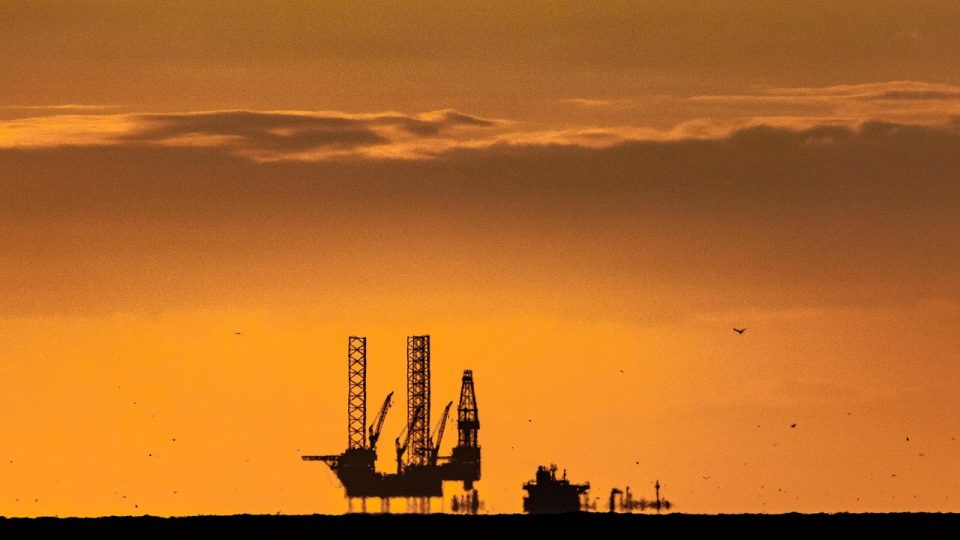
Let’s break down what actually happened. Argentina recently tried to put the brakes on a massive oil exploration project happening near the Falklands. The project, known as the Sea Lion venture, is located roughly 130 miles away from the islands. We are talking about a seriously huge amount of oil here—an estimated 1.7 billion barrels, to be exact. Two companies, Rockhopper Exploration from the UK and Navitas Petroleum from Israel, are planning to start pulling oil out of this field within the next two years. For the roughly 3,500 people who live on the islands, this project could end up generating massive revenues.
Naturally, the government in Buenos Aires wasn’t thrilled about this. They argued that because there is an ongoing sovereignty dispute over the Falklands—which is a British overseas territory—nothing should be done that could alter the current situation, especially drilling for oil. They also argued that the marine environment in these disputed maritime areas should be protected under international law.
So, Argentina took their case to a UN-backed international tribunal, asking them to halt the Sea Lion venture. But things didn’t go quite the way they hoped.
The International Tribunal for the Law of the Sea ultimately rejected Argentina’s bid in an 18-3 vote. The president of the tribunal made it pretty clear during the hearing that their court simply wasn’t the right place to deal with questions of sovereignty. Basically, the tribunal decided that this whole dispute comes down to territory, and a maritime court doesn’t have the jurisdiction to rule on it.
Predictably, reactions from both sides were sharp. Over in London, officials were understandably thrilled. Ellie Reeves, the Attorney General for England and Wales who presented the UK’s legal arguments in Hamburg, told the BBC that the ruling was “really significant” and a “clear win for the UK government.” In a joint statement with Foreign Secretary Ed Miliband, Reeves also called on Argentina to end its wider economic pressure against the territory, pointing out that Argentina had tried to stop the islanders from making their own sovereign decisions and failed.
On the flip side, Argentina’s President Javier Milei made it clear that this isn’t the end of the road. Following the ruling, he declared that “this decision is not the final word” and firmly stated that “the Falkland Islands are Argentine.” Buenos Aires also argued that they weren’t actually asking the court to rule on sovereignty itself, but rather to apply UN sea laws regarding the exploitation of resources. Plus, the Argentine government warned that five individuals involved in the oil drilling venture would face sanctions, though they didn’t name names.
Experts are already weighing in on what this means for the future. Professor Marc Weller from the Chatham House think tank told the BBC that Argentina’s legal challenge had “provisionally, but spectacularly, fallen at its first hurdle.” While there’s a chance the case might be heard more fully by an arbitral tribunal next year, this initial setback definitely casts some serious doubt on how viable Argentina’s claims will be moving forward.
If you need a quick history refresher, this is just the latest chapter in a long-running rivalry. The UK and Argentina famously fought a 74-day war back in 1982 after Argentine forces landed on the islands to press their territorial claims. That conflict sadly resulted in the deaths of 255 British military personnel, three islanders, and 649 Argentine military personnel.
Ever since then, Argentina has continuously maintained its claim to the islands through various degrees of diplomacy and pressure. Meanwhile, the UK government maintains that sovereignty firmly rests with Britain, emphasizing that the local population has a fundamental right to self-determination. If you look back at a 2013 referendum, the residents of the islands voted overwhelmingly—a staggering 99.8%—to remain a British overseas territory.
It’s a complex situation with deep historical roots, and it’s pretty clear this won’t be the last time we hear about it. What do you guys think about the tribunal’s decision? Let me know your thoughts in the comments below, and I’ll catch you all in the next post!
source: feeds.bbci.co.uk (www.bbc.co.uk)
Photo by Randgruppe on Pixabay