Europe’s Youth Are Taking to the Streets in a Wave of Frustration
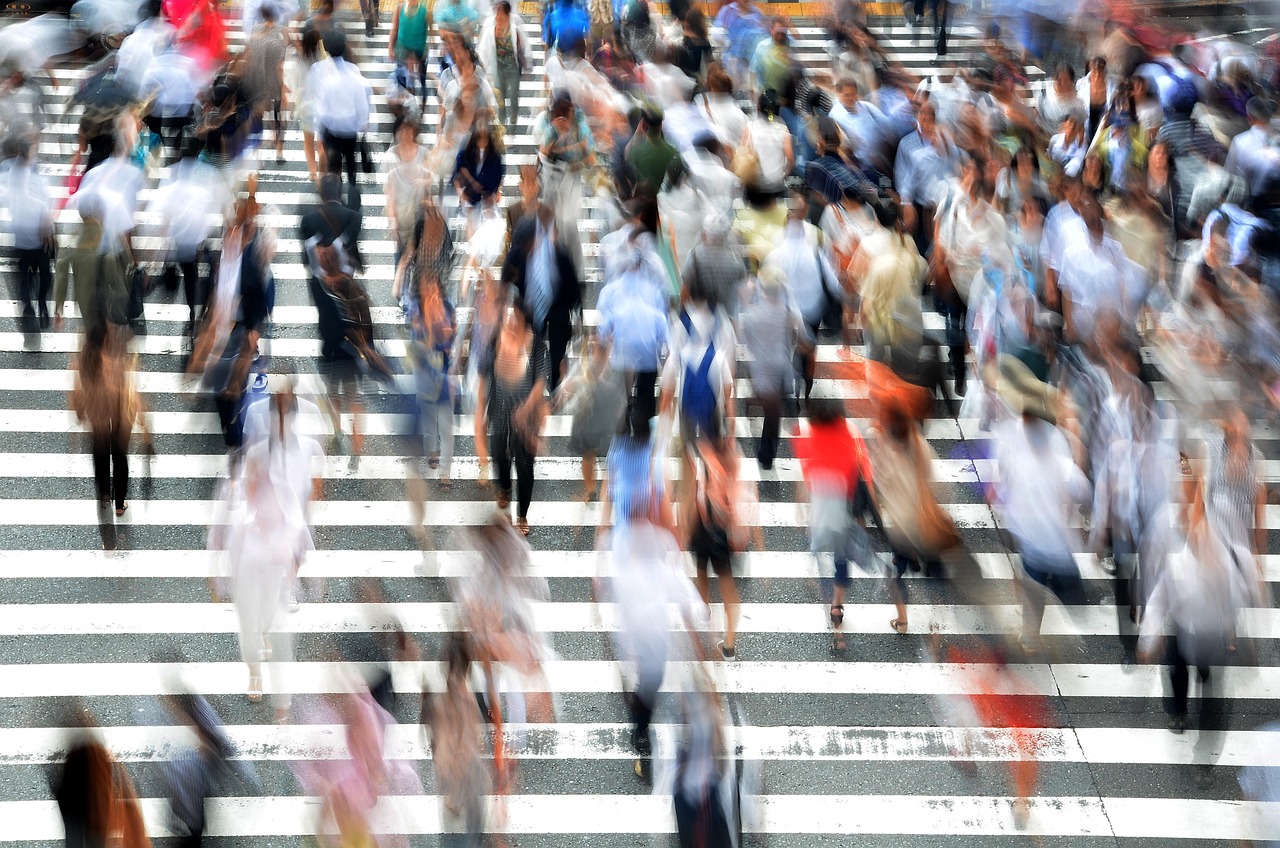
Hey there, fellow news surfers! If you have been keeping half an eye on what is happening across the European continent lately, you probably noticed that things are getting pretty loud and colorful out there. From the stylish avenues of Milan and Marseille to the bustling squares of Madrid, cities have turned into hotspots for passionate protests over the past few weeks.
Now, while a good chunk of these demonstrations start off completely peaceful, a fair few of them have unfortunately spiraled into some pretty wild scenes involving heavy looting and clashes. We are hearing reports about radical left-wing elements potentially stirring the pot on purpose, alongside plenty of criticism directed at heavy-handed police tactics.
Just think about the sheer scale of it all. Thousands of folks have been rallying together in Rome and Florence, and we are talking about hundreds of thousands hitting the pavement in France. If you head over to Madrid, you will spot a whole tent encampment that has completely taken over a central square since late September. Meanwhile, down in Lisbon, tens of thousands—mostly younger folks—marched earlier this month. Over in Brussels, things got so tense that police had to bust out tear gas and water cannons after groups of young guys dressed all in black started launching rocks and firecrackers at law enforcement. Even in Albania, angry crowds are demanding the resignation of Prime Minister Edi Rama, who has already been in power for well over a decade, blaming his administration for government corruption.
There is no denying it: the entire continent feels socially and politically on edge right now.
Having spent quite a few years covering demonstrations of all shapes and sizes across Europe, I have seen my fair share of intense moments. I remember the fiery Catalan pro-independence marches back in 2017, the absolute desperation and flying Molotov cocktails during the Greek debt crisis in 2015, and the various bouts of social unrest in France during President Emmanuel Macron’s first term—especially those sparked by fuel tax and pension reform ideas.
Yet, this current wave just feels completely different. These protests are popping up simultaneously all over Europe, and the vast majority of the people marching—whether they are behaving peacefully or getting caught up in the riots—are young. In fact, some of them are really young. Law enforcement agencies have noted a surprisingly high number of minors among those arrested. For instance, over half of the individuals detained during the scuffles in Barcelona last weekend were under 18 years old. Similar situations involving minors occurred in Milan following clashes reported by local news agencies.
European governments have generally tried to draw a clear line between the rioters and looters on one side, and the vocal but legally organized, peaceful demonstrators on the other. Those peaceful marches usually hone in on specific causes. If you look at the placards and listen to the chants right now, the primary targets are education grievances, growing social inequalities, and the crushing cost of living—though every single country also brings its own unique set of local complaints to the table.
So, what exactly lit this massive fire under Europe’s youth so quickly? Are all of these separate demonstrations connected in some way? And with major European elections looming on the horizon, how are governments going to react? Will they actually sit down and listen to the valid concerns of these protesters, or will they lean heavily into a law-and-order approach just to win over older voters?
Students have been taking over the streets in France, Belgium, Ireland, Spain, Portugal, Italy, Greece, Serbia, and Albania—spanning a massive distance of over a thousand miles across the continent.
A lot of these demonstrations are organized in a very ad hoc fashion using platforms like TikTok or Instagram. In fact, Belgium’s interior minister has publicly complained about what he calls the “TikTokisation” of modern protests. While formal student unions definitely play a part in setting up these marches, the kids are also heavily inspired by what they see their peers doing in other countries and even other parts of the world. Just look at the “Cockroach” student movement that popped up in India back in May, which started as a grassroots Gen Z movement criticizing the local education system.
France has served as a massive catalyst for this European movement, with student protests kicking off there in late September over severe staff shortages and crumbling, dilapidated school buildings. There is an old saying in neighboring Belgium: when it pours in Paris, it at least drizzles in Brussels. True to form, the Belgian capital and the town of Liège have also seen weeks of protesting youngsters.
Over in Athens, school pupils and teachers have been out in force demonstrating over similar education issues and living costs. A 17-year-old Greek student named Yiannis Papanikolaou shared his frustration with reporters, pointing out that local school buildings are in terrible, poorly maintained shape, and expressing hope that France’s actions might inspire real change in Greece as well.
There is a broad, continent-wide economic malaise weighing heavily on young people, and it reaches way beyond just classrooms. They are deeply worried about the environment, and they live in fear that artificial intelligence is going to steal away their future job opportunities. They also worry that the relentless rise in the cost of living will cut their education short and stop them from ever buying or renting a home large enough to start a family.
In places like Madrid and Lisbon, a huge chunk of that frustration is laser-focused on the absurdly high price of housing. Instagram campaigns in Portugal declared that “enough is enough,” urging people to take to the streets just like their peers in Spain did. Carolina Cruz, a 26-year-old PhD student and biology researcher in Lisbon, explained that she is facing the very real possibility of losing her home as her rental contract comes to an end. Even as the first person in her family to pursue a doctorate, she feels like all her hard studying still leaves her unable to make ends meet.
It is an anger echoed by 22-year-old Riccardo, a protester in Italy’s financial hub of Milan. He noted that even if they cannot manage to throw the country into complete chaos like in France or block every single road like in Spain, the main goal is simply getting people to start talking about these critical issues again.
And let’s be clear—this anger is not limited to folks on the left side of the political spectrum. At a recent presidential campaign launch for French nationalist figure Marine Le Pen, young supporters shared a different set of worries. Viewing themselves as a “silent majority” that has not quite hit the streets in protest yet, they expressed deep concerns regarding uncontrolled immigration, street safety in France, and the ongoing cost of living crisis.
This massive outpouring of discontent has also started bleeding past the younger generation, pulling in trade unions, members of France’s fragmented “Yellow Jacket” movement from previous years, and various other citizen groups. Even down in the coastal southern English region of Kent, recent weekends have seen competing protests pop up both for and against immigration.
It can all feel a bit confusing with so many different groups mixing together.
Mark Leonard, director of the European Council of Foreign Relations, points out that Europe has experienced a continuous buildup of cascading, competing crises, none of which ever really got properly resolved. That pent-up frustration is finally bubbling over into the streets.
As he explains, one major crisis just keeps layering on top of another—starting with the financial crash back in 2007-2008, followed by the migrant crisis in 2015, environmental emergencies, the COVID-19 pandemic, the inflation surge after Russia’s invasion of Ukraine in 2022, and now ongoing conflicts in the Gulf.
Leonard notes that these successive crises have birthed entirely different social “tribes.” Combined with the way social media algorithms consume attention and harden differing viewpoints, Europe is seeing a very real sense of political and social polarization.
On the other hand, Nathalie Tocci, a former Italian government adviser and current politics professor at Johns Hopkins University, suggests we should not be entirely shocked by these protests or by how actively young people are engaging.
We often fall into the trap of assuming that youngsters are completely tuned out and disinterested in politics, she explains, pointing out that while they might not show up to traditional ballot boxes in the same way, they are deeply engaged through grassroots movements. She reminds us of past phenomena like the continent-wide “Fridays for the Future” environmental movement or the widespread demonstrations following events in the Middle East.
So, what do you think? Are these youth-led movements going to force governments to change their tune, or are we heading toward an even deeper political divide? Let me know your thoughts in the comments below, and stay tuned as we keep following this developing story!
source: feeds.bbci.co.uk (www.bbc.co.uk)