Are Russian Satellites Helping the Houthis Target Saudi Arabia?
Hey everyone! Welcome back to the blog. Today, we are diving into some pretty intense global news that sounds straight out of a spy thriller. We are talking about the ongoing conflict involving the Houthis in Yemen, Saudi Arabia, and some surprising new details about high-tech assistance coming from space. Grab your coffee, and let’s break down what is actually happening.
Over the past few months, things have really heated up in Yemen. The conflict between the internationally recognized Yemeni government—which has the backing of Saudi Arabia—and the Iran-aligned Houthi rebel group has been ongoing for a while. However, things took a major turn back in July and escalated further in September when the rebels managed to grab full control of Yemen’s Red Sea coast. Since then, we have seen a wave of drone and missile attacks hitting various locations across Saudi Arabia.
Now, a recent investigation is shedding light on how these rebel fighters are managing such precise operations. According to findings by a Geneva-based private intelligence firm called AURORAH GeoSignal Intelligence, Russian satellites might actually be helping the Houthis target Saudi military and energy infrastructure.
What the Space Investigation Uncovered
If you are wondering how a private firm figured this out, it all comes down to tracking eyes in the sky. Between July 1 and October 19, AURORAH looked closely at 40 different drone and missile attacks launched by the Houthis against Saudi Arabia. In every single one of those cases, the firm found a distinct pattern: Russian government and military satellites were actively observing the targeted zones both before and after the strikes took place.
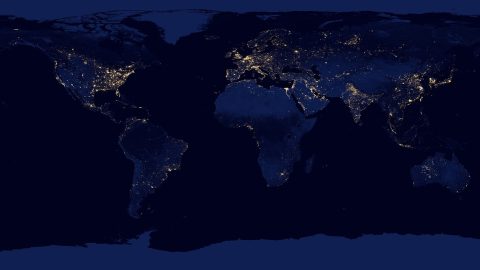
Nawaf Obaid, the founder of the geosignal intelligence firm, explained to the press that they managed to reconstruct Russia’s military reconnaissance architecture. By calculating orbital trajectories and individual satellite movements, they were able to connect Russian satellite activity directly with military developments happening not just in Saudi Arabia, but also across Jordan, Bahrain, Kuwait, Qatar, the UAE, and Yemen.
The list of identified satellites sounds super futuristic. It includes Russia’s Bars-M military mapping satellites, Persona optical reconnaissance systems, Lotos-S1 electronic intelligence gadgets, Pion-NKS maritime systems, and Kondor-FKA radar-imaging satellites. They even spotted early-warning infrared constellations like EKS/Tundra.
According to Obaid, the real kicker wasn’t just that these satellites happened to be up there, but rather how their complementary intelligence capabilities were sequenced and integrated. Basically, Russian military geospatial and signals intelligence appears to be feeding right into the Iranian-led intelligence network that assists Houthi operations on the ground.
A Closer Look at the Infrastructure Strikes
To understand why this matters so much, we just have to look at what has been getting hit. Last month, the Houthis pulled off a precision strike on pumping stations along Saudi Arabia’s crucial East-West oil pipeline. AURORAH’s investigation revealed that Russian satellites had actually been surveying that exact region days in advance to gather intelligence on the pipeline.
The September attacks targeted three specific pumping stations—station PS8 at Afif, PS9 at Al-Dhekra, and PS11 at Al-Mesba’ah—all located within the pipeline’s critical high-elevation western section. Military experts note that hitting these specific spots shows a deep understanding of the engineering vulnerabilities and the strategic importance of the infrastructure.
Of course, experts are urging a bit of caution when connecting all the dots. Elijah Magnier, a military analyst based in Brussels, pointed out that not being able to intercept an intelligence transmission doesn’t automatically prove who had access to the data. He laid out a few different scenarios: Russia might have deliberately shared the info with Iran, Iran could have somehow obtained Russian satellite imagery through commercial channels, or perhaps a third-party intermediary passed the information along.
At the same time, Obaid clarified that while their assessment proves a broader intelligence relationship between these players, linking a specific satellite directly to an individual missile launch still requires a bit of extra corroboration.
Even with those analytical caveats, officials are starting to speak out. Recently, Rayed Krimly, the deputy minister for public diplomacy at the Saudi Foreign Ministry, told reporters that the Houthis are indeed receiving intelligence support from both Russia and China. He mentioned that Saudi officials regularly discuss these very matters with Beijing and Moscow.
Why This Changes the Game in Yemen
So, why is this a massive deal for the region? Ahmed Nagi, a senior analyst on Yemen at the International Crisis Group, explains that if Moscow is genuinely supporting Tehran’s allies like the Houthis, it marks a huge shift in the Yemeni conflict. It means the war is moving far beyond its domestic borders and becoming tangled up in much larger global and regional rivalries.
Nagi points out that whether this support is being handed directly to the Houthis or channeled indirectly through Iran doesn’t change the bottom line: the rebel group is now benefiting from diversified external support involving multiple powerful countries. Plus, Russia’s backing isn’t just happening on the ground or in orbit; Moscow has also taken diplomatic stances at the United Nations Security Council to oppose stronger international actions against the Houthis.
Meanwhile, the situation on the ground continues to develop rapidly. Houthi spokespersons have publicly claimed responsibility for hitting various commercial and military sites across Saudi Arabia, ranging from eastern and western coastal areas all the way to Riyadh and the southern region of Najran, utilizing everything from ballistic missiles to drone strikes.
As this geopolitical puzzle continues to unfold, one thing is abundantly clear: local conflicts are increasingly being shaped by global technology and international alliances. We will definitely keep keeping an eye on this story as it develops. Thanks for reading, and let me know your thoughts in the comments below. See you in the next post!
source: aljazeera.com (www.aljazeera.com)