French Authorities Raise Alarms Over Social Media’s Role in Fueling Ongoing National Protests
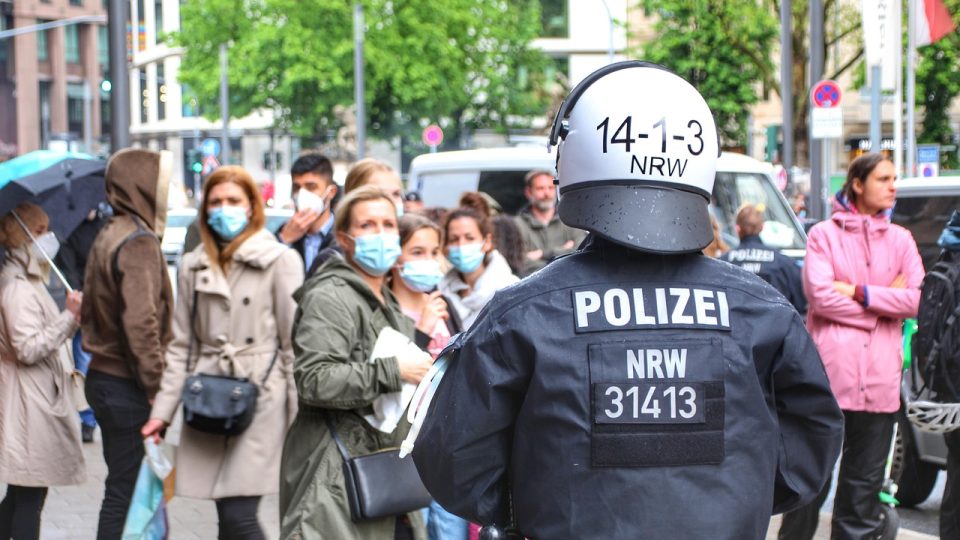
Hey there, fellow news followers! If you’ve been keeping an eye on international headlines lately, you probably know that France has been dealing with some serious tensions on the streets. What started out as a relatively small group of high school student protests around the outskirts of Paris has snowballed into a massive, widespread movement. We are talking about hundreds of thousands of people nationwide coming out to voice their grievances, resulting in some pretty intense standoffs with law enforcement. Let’s dive into what’s been going on over there and why government officials are now pointing a finger directly at social media.
Over the weekend, cities all across France saw yet another wave of demonstrations. The French interior ministry crunched the numbers and estimated that around 320,000 people turned out nationwide. While that is actually a noticeable drop compared to the previous couple of Saturdays—when numbers hit around 410,000 and even 550,000—the situation on the ground remained thoroughly tense and unpredictable. As official daytime rallies began to wind down, things started taking a chaotic turn, particularly as night approached.
Now, what makes this particular weekend even more complicated is the calendar. Saturday happened to be Halloween, and that timing sent a wave of anxiety through French authorities. Officials pointed out that various online posts were actively encouraging people to hit the streets in masks and full costumes while participating in what they called “revolts.” Because of these digital calls to action, the government warned that the risk of renewed violence and unrest was extremely high once the sun went down.
In the capital city of Paris, the afternoon started off with a fairly sizable turnout. Police estimated that about 70,000 people took part in the main march, a decline from the 110,000 participants recorded the week prior. For the most part, the daytime atmosphere had its moments of calm—and even a bit of festivity. In fact, at one point during the authorized route, someone even tossed candy down from a balcony, drawing cheers from the crowd below! But as we’ve seen happen repeatedly over the past few weeks, the vibe shifted dramatically as evening approached.
Once the main permitted events ended, spontaneous and unauthorized processions began to form. In eastern Paris, hundreds of demonstrators—many of them dressed completely in black and wearing masks to cover their faces—formed a breakaway group. While some members of the crowd were singing, dancing, and blasting music from portable speakers, the tension in the air was palpable. As this group neared a square lined with bustling bars and restaurants, nervous waiters rushed to pull in their outdoor seating areas just as police officers arrived on the scene.
Unfortunately, things didn’t stay peaceful for long. Soon enough, the familiar sounds of loud bangs echoed through the streets as people began running backward away from thick clouds of tear gas. Witnesses reported seeing mortar-like fireworks and projectiles being hurled toward law enforcement. Police officers responded by blocking off major roads, deploying tear gas, and charging at groups that refused to disperse. Reports from the scene noted young individuals being treated by medics for facial bleeding, while small fires and burning vehicles added to the chaotic scenery.
It wasn’t just Paris, either. Clashes between stubborn protesters and police forces erupted in several other major French cities, including Marseille, Lyon, Toulouse, and Rennes. In these areas, authorities had to deploy heavy-duty measures like water cannons and tear gas to clear out lingering crowds who refused to head home after the official events concluded.
Behind these chaotic scenes lies a growing coalition of frustrated citizens. What began roughly two months ago as high school student demonstrations over school conditions has rapidly expanded. The movement now includes university students, public sector workers, and even veterans of the famous “yellow vest” movement that heavily disrupted France between 2018 and 2020. Even though the Education Ministry tried to appease students by making concessions—such as capping certain class sizes, offering low-interest loans to fix up aging school buildings, and phasing out an unpopular online college admissions platform—the students made it clear they aren’t satisfied and vow to keep protesting.
Amid all this civil unrest, French officials have started focusing heavily on a modern culprit: social media. Government leaders are growing increasingly concerned about how digital platforms are being used not just to attract massive crowds, but actively to incite violent behavior and lawlessness.
Ahead of the weekend, Interior Minister Laurent Nuñez held a news conference where he addressed these digital warnings head-on. He noted that authorities were closely monitoring numerous online calls to action originating from the far left, radicalized extreme left groups, and certain radicalized “yellow vest” web spaces. These messages were urging people to show up at public gatherings starting at 8 p.m. across various cities, with some posts using fiery language that called explicitly for “revolution” and “insurrection.”
Mr. Nuñez made it crystal clear that these unauthorized evening gatherings were strictly forbidden and that anyone trying to assemble despite the ban would face immediate arrest. He also issued a specific warning regarding Halloween attire, reminding the public that under French law, it is a criminal offense to conceal your face during a public demonstration that disrupts public order.
The role of digital platforms became such a hot topic that rumors even swirled online suggesting the French government was considering temporarily shutting down several popular websites altogether. However, that particular speculation was quickly put to rest with an official denial from President Emmanuel Macron himself.
Adding another layer of complexity to the protests, officials also confirmed that it isn’t just far-left activists driving the mayhem. Intelligence and security personnel noted that bands of young men tied to the far-right have also managed to infiltrate the demonstrations. While these groups often use the excuse of protecting local shop owners, they frequently end up in direct brawls with far-left factions.
Despite the heavy risks and the clear potential for violence, some participants showed up with entirely different intentions. Among the crowds in Paris were volunteers like Morgane Voisin, a 22-year-old sales consultant, and Corentin Schnell, a 19-year-old engineering student. Both wore distinct white outfits marking them as “street medics”—people volunteering to administer first aid to anyone who gets hurt.
Corentin shared that he initially joined the demonstrations after hearing terrifying accounts from his younger brother, who claimed he was nearly hit by a stun grenade and caught in tear gas during a previous protest. Disturbed by reports of injuries on the streets, Corentin and Morgane decided to step in to provide medical assistance and minimize harm, no matter which side of the barricades the injured person happened to be on. Fortunately, during their patrols, when they encountered someone with a head injury, help was able to arrive swiftly.
As the weekend drew to a close, the French government found itself grappling with a deeply entrenched social crisis. With students heading back to classrooms and various activist groups vowing to maintain pressure on the state, the friction between citizens and authorities shows very few signs of disappearing anytime soon. And as officials continue to scrutinize the digital world for its part in accelerating these fiery gatherings, the debate over online freedom versus public safety is bound to heat up just as much as the streets of Paris.
What are your thoughts on how governments should handle online calls for protests? Do digital platforms bear the responsibility for real-world chaos, or are they just a symptom of deeper underlying frustrations? Drop your thoughts in the comments below, and stay tuned as we keep following this developing story!
source: nytimes.com (www.nytimes.com)
Photo by Blaulicht_Rheinland_NRW_ on Pixabay
