Tension Rises Across Europe as Mass Protests Lead to Clashes and Arrests
Hey everyone, welcome back to the blog! Today, we are taking a look at some pretty intense scenes that played out over the weekend in France and other parts of Europe. If you have been keeping an eye on the news, you probably know that public frustration has been bubbling over for a while now. Well, things really came to a head this past Saturday.
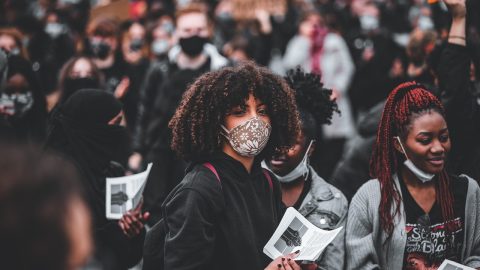
Tens of thousands of people took to the streets in France for what marks the third wave of major demonstrations. The main triggers for all this anger? Rising living costs, crumbling public services, and growing economic inequality. People from all walks of life—including high school students who have been organizing for weeks, trade unions, and members of the yellow vests movement—decided it was time to make their voices heard. Some even added a seasonal twist to the marches, wearing Halloween costumes while they walked.
According to figures shared by the interior ministry, roughly 320,000 individuals joined the rallies nationwide. That number is actually a bit lower than the estimated 410,000 who marched the previous weekend. In Paris alone, about 70,000 people gathered, keeping to a route along the south-eastern outskirts and steering clear of the busy city centre. Overhead, a police helicopter tracked the movement as marchers carried signs bearing messages like, “No need for teargas to make our future look bleak,” and “Disguised as an angry citizen for Halloween.”
For the most part, the daytime demonstrations were peaceful. The interior minister noted that around 150 planned events across the country went off without any major issues. But as evening approached, the mood shifted dramatically in several cities. Just like the weekend before, groups of masked rioters blended into the crowds and brought a whole new level of confrontation.
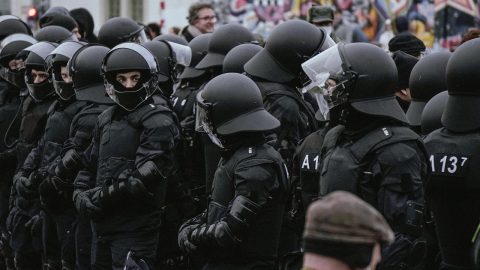
The authorities were certainly expecting trouble. Earlier in the week, it was announced that a massive force of 70,000 police officers and gendarmes—complete with elite units—would be deployed to maintain order, with officials warning that Saturday carried a very high risk of violence. And unfortunately, those warnings turned out to be spot on.
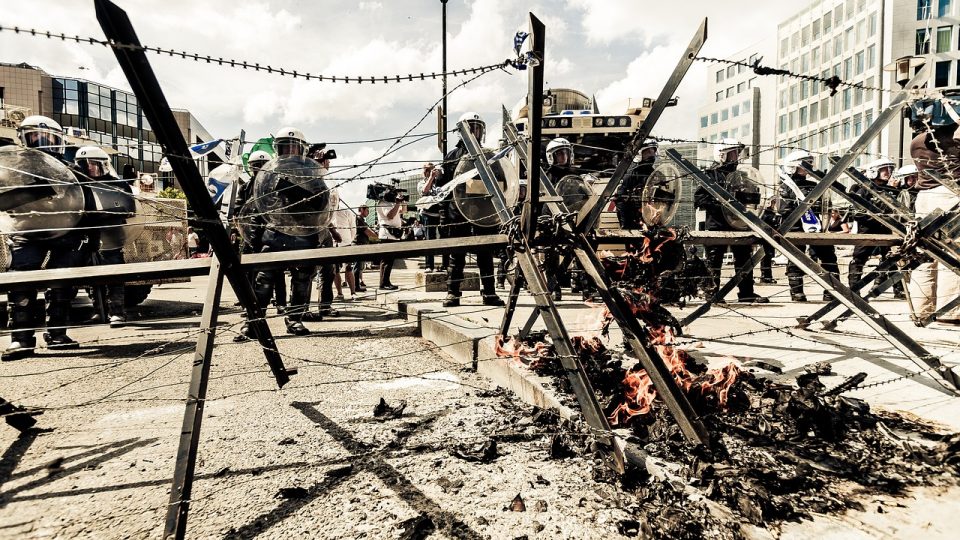
As darkness fell, trouble broke out near the end of the Paris march around the Porte de Charenton. Dozens of masked individuals dressed in black used hammers to rip up paving stones and hurl them directly at law enforcement. At least one incendiary device was also thrown at the security forces. The situation escalated to the point where an interior ministry official described an attack involving a molotov cocktail hitting a riot police officer as an “attempted murder.”
The police response was swift. Officers fired teargas and stun grenades and used baton charges to push back what authorities described as a “hardcore of several hundred rioters.” Similar violent flare-ups happened in other French cities too. In Lyon, protesters threw various projectiles at officers, forcing the police to respond with teargas. Meanwhile, in Toulouse, law enforcement deployed water cannons against an unauthorized gathering that had attracted thousands of mostly young participants.
By the end of the night, the interior ministry reported that 565 people had been arrested across the country. In Paris alone, four police officers and one gendarme sustained injuries during the clashes.
Protesters participating in the marches were vocal about their frustrations with the current political leadership. One demonstrator in Paris pointed the finger squarely at the government, criticizing officials for juggling massive sums of money while everyday families struggle just to get by. Another participant in Nantes echoed similar sentiments, stating clear opposition to the high cost of living and the far-right, while advocating for student demands and giving ordinary citizens a voice.
If you recall, this weekend’s events follow massive street unrest and looting that hit multiple French cities on October 17th—an event that marked one of the most severe days of civil disobedience in the country’s recent memory. And it looks like things aren’t calming down anytime soon. Student organizations have already announced plans for more high school and university blockades in the coming days, followed by a joint mobilization with workers and trade unions on November 5th.
Protests Spread Across the Rest of Europe
France wasn’t the only place experiencing high tensions this weekend. Across Europe, similar scenes unfolded as demonstrators took to the streets over various economic and social grievances.
In Germany, police also had to use heavy-handed tactics to manage crowds as evening fell. A youth-led movement organized under the banner “Gen Z regelt!” (Gen Z will sort this) held mostly peaceful demonstrations advocating for better education, health care, climate action, and a more affordable lifestyle in dozens of cities. However, just like in France, the end of the events saw tensions spike.
In Frankfurt, which serves as Germany’s financial hub, things took an ugly turn when protests turned violent. A witness reported that at least two stores were looted, several others suffered damage, and police scrambled to regain control after fireworks were set off to temporarily halt a march. In Cologne, authorities deployed water cannons after protesters targeted officers with fireworks. Over in Berlin, crowds hurled bottles and eggs, barricades were set ablaze in Hamburg, and police used pepper spray in several locations to disperse unruly groups.
Moving further south, Albania’s capital saw renewed anti-government demonstrations as protesters renewed their calls for Prime Minister Edi Rama to step down. What started as a peaceful gathering in the rain outside the education ministry in Tirana quickly deteriorated when a group of masked youths began launching paving stones and firebombs at police, alongside setting rubbish bins on fire.
Law enforcement agencies were also on high alert in other tourist and cultural hubs. In Barcelona, security forces monitored the situation closely after an anonymous TikTok network called Blocus urged people to gather for new protests. Similar precautions were taken in Italy following recent clashes between demonstrators and police in cities like Milan, Turin, and Bologna.
It is clear that public discontent regarding economic pressures and political leadership is running high in multiple countries right now. As these movements continue to organize and mobilize, governments are facing mounting pressure to address the underlying issues driving people into the streets. We will keep following these developments and bring you updates as they happen. Stay safe, and see you in the next post!
source: theguardian.com (www.theguardian.com)