The Blind Spots Behind India’s Massive Voter Protests
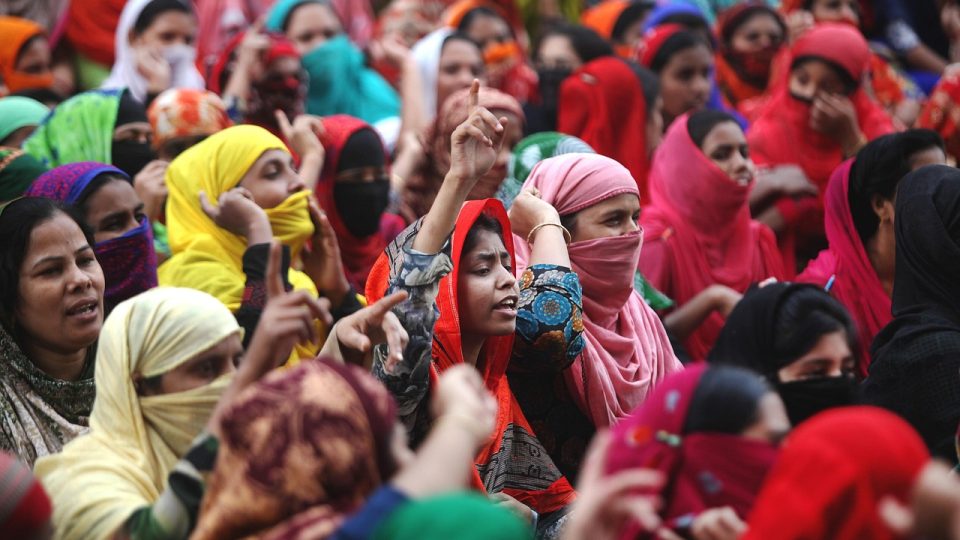
Hey there, news watchers! Today, let’s talk about something pretty intense happening over in India right now. If you’ve been keeping an eye on international news, you might have noticed that streets across the country are filling up with protesting crowds. We are talking about everyday folks, students, farmers, and opposition politicians all marching together. Why? Because a massive chunk of names—around 130 million of them, to be exact—have suddenly vanished from the electoral rolls.
The protests are loud and clear: people want the old voter lists back, and they want the Chief Election Commission bigwig, Gyanesh Kumar, to step down. The whole ordeal is officially called the Special Intensive Revision (SIR) by the Election Commission of India (ECI). Basically, voters are suddenly being forced to dig up ancient paperwork just to prove they actually have the right to cast a ballot.
Now, seeing communities stand shoulder-to-shoulder is powerful stuff. But as we look closer at these rallies, a pretty glaring irony starts to peek through. Back in December 2019, things looked quite different. Around that time, the Indian Parliament passed the Citizenship Amendment Act (CAA). This law was designed to fast-track citizenship for people fleeing persecution from certain neighboring countries—as long as they weren’t Muslim, that is. When that law dropped, the Muslim community tried to sound the alarm. They warned everyone that tying citizenship to complicated paperwork and official documents would leave millions vulnerable, especially Muslims.
Back then? Their warnings were largely brushed aside. A lot of the very people marching against voter exclusion today were totally fine looking the other way when it was just Muslims raising red flags. But now that the administrative machinery is suddenly swallowing up Hindu voters and folks from all walks of life too, everybody is suddenly up in arms.
Connecting the Dots: From 2019 to Today
To really understand how we got here, we have to rewind just a bit. Back when the CAA was making waves, top government officials like Home Minister Amit Shah were laying out a specific timeline. First came the citizenship bill, and the next logical step mentioned at the time was a National Register of Citizens (NRC). The idea was that every single person living in India would have to prove their citizenship from scratch.
Muslim citizens immediately saw the writing on the wall. Think about it realistically: how on earth is a family struggling just to afford a roof over their heads or two decent meals a day supposed to track down dusty old bureaucratic documents they were never told to keep? The CAA offered a safety net for everyone caught in that trap—except for Muslims.
That winter, massive protests broke out. Remember the incredible sit-in at Shaheen Bagh led by brave Muslim women in Delhi? They weren’t just guessing about what a future NRC might look like; they were outright rejecting a system built on religious discrimination. Meanwhile, Prime Minister Narendra Modi insisted that the government hadn’t even discussed a nationwide NRC, and a huge slice of the population happily took his word for it.
Fast forward a few years, and here we are. Even without an official nationwide NRC announcement, offices across the country are demanding those exact same documents under a brand-new label. When the ECI ordered a revision in Bihar back in June 2025, one of the stated reasons was sniffing out “foreign illegal immigrants.” The rules relied heavily on birth dates and parent verification. Essentially, regular voter lists are now quietly operating as a back-alley citizenship test.
What’s Actually Happening on the Ground
Take a look at West Bengal, where this revision process has already run its full course. It gives us a pretty clear window into how the whole machine operates. Before the state went to vote in April, about 9.1 million names—roughly 12 percent of the total electorate—were given the boot.
When researchers and booth-level counters crunched the numbers, they found some fascinating details. At the very first stage, where officials weed out people who are supposedly dead, shifted, or duplicated, Hindu and Muslim names were dropped in roughly equal proportions based on their population size.
The real trouble started at the second stage, where state officials had to make judgment calls on roughly six million voters whose forms had what officials called “logical discrepancies.” A discrepancy could literally be as minor as a parent’s name being spelled slightly differently on an old 2002 roll compared to today. Judicial officers ended up scrubbing 2.7 million people from the lists during this phase. An analysis of those published lists showed that about 70 percent of the people cut at this tricky second stage were identified as Muslim by their surnames—even though Muslims only make up about a quarter of the state’s total electorate.
Meanwhile, political groups were setting up special camps in border districts specifically to help Hindu refugees apply for citizenship under the CAA, ensuring they kept their spots on the voter rolls. If you’re a Hindu family missing paperwork, there’s a legal path waiting for you. If you’re a Muslim family missing that exact same piece of paper? Well, good luck waiting years for a tribunal to clear your case.
These cuts aren’t just limited to West Bengal either. In Delhi, a draft roll published in late August chopped off nearly a third of the city’s voters. Neighborhoods like Okhla—which includes Shaheen Bagh and Jamia Nagar—lost nearly half of their electorate in one fell swoop.
Selective Outrage
The fact that citizens far beyond the Muslim community are suddenly struggling to prove they belong on the voter rolls is tragic, but it should theoretically make the push for basic administrative safeguards much stronger. The big question, though, is simple: who are these proposed safeguards actually meant to protect?
If you look at the official demands laid out by the opposition’s political alliance, they call for removing the Chief Election Commissioner, bringing back old rolls, using paper ballots, and offering “protection for genuine voters from exclusion due to technical/administrative reasons.”
Sounds reasonable, right? But look closely at that phrasing. It aims to protect a “genuine voter” from a careless, clumsy official. It says absolute zero about the voters whom the state has already arbitrarily decided are *not* genuine. In places like West Bengal, those people happened to be overwhelmingly Muslim. Even as the opposition marches, some of their leaders have historically played right into the government’s narrative about hunting down so-called “infiltrators.”
At the end of the day, these massive protests are highlighting a deep, uncomfortable truth about modern political movements. It’s wonderful to see people hitting the streets and standing up for their democratic rights. But until a protest movement is willing to tackle discrimination at its root—rather than just complaining when the exclusionary machine finally catches up to everyone else—the fight for justice is going to remain painfully selective.
What do you guys think about all this? Drop your thoughts in the comments below, stay informed, and I’ll catch you in the next post!
source: aljazeera.com (www.aljazeera.com)