Diving Back Into the Deep: Why Blue Planet III is Still Pure Magic
Hey there, fellow screen-watchers and nature doc fanatics! If you are anything like me, finding something good to watch on a Sunday night can sometimes feel like an uphill battle. We are living through some pretty exhausting times, and it is totally normal to feel that heavy weight of fatigue hanging over us. But every once in a while, a piece of television comes along that just demands to be watched, reminding us of the sheer wonder still left in this big old world of ours.
Enter Blue Planet III, the latest massive natural history offering brought to our screens by none other than the legendary Sir David Attenborough. Let’s be real for a second: whenever a new series like this drops, it is hard not to feel a tiny pang of melancholy. Attenborough is 100 years old, meaning our time sharing this planet with his iconic voice narrating our screens is steadily ticking down. Plus, let’s face it, watching BBC One on a Sunday night just doesn’t feel like the monolithic cultural gathering it used to be back in the day.
We also go in knowing it can’t quite capture that absolute lightning-in-a-bottle magic of the original Blue Planet back in 2001. And even Blue Planet II back in 2017 had that massive conservation wake-up call moment regarding ocean plastic—a cultural shift that, looking back, feels a bit like a tiny pebble tossed into an ocean-sized crisis we are unfortunately still losing.
So, should we just expect another recycled formula? Honestly, even if it does lean into some familiar territory, that exact familiarity acts like a warm, comforting blanket. And spoiler alert: it is an absolute corker.
Unlocking Ocean Mysteries Down Under
Even after all these years of underwater filmmaking, the ocean still manages to hold onto its secrets until someone with the right gear and patience comes along to pry them open. Episode one wastes zero time delivering a massive scoop straight from the sandy ocean floor over in Shark Bay, Western Australia.
For a long time, researchers and viewers alike were scratching their heads over a quirky local habit: why on earth were the local dolphins swimming around with sea sponges clutched firmly in their mouths? Thanks to the dedication of the Blue Planet crew, we finally get answers. But if you watch the making-of featurette at the end of the episode—and you definitely should—you will see that cracking this nautical code wasn’t a walk in the park. It took cutting-edge remote cameras, careful and patient dolphin-courting, and yes, putting a brave cameraman named Alex in genuine peril of being turned into a quick snack by a hungry tiger shark.
Things get even wilder just around the corner in northern Australia. Tawny sharks are out here switching up the rulebook, or at least showing us behaviors we’ve never caught on tape before. Instead of hunting solo, these sharks are teaming up and executing a proper tactical deception. They literally play dead to lower the guard of unsuspecting herring. Once the fish are lulled into a false sense of security, the sharks spring into coordinated action, driving the tasty minnows straight toward the shore where they trap them and host a massive feast.
High-Stakes Chases and Comic Relief
You simply cannot have a major Attenborough production without at least one heart-pounding, edge-of-your-seat death chase. For this installment, the crew takes us all the way to Brazil for a high-stakes round of shark versus turtle.
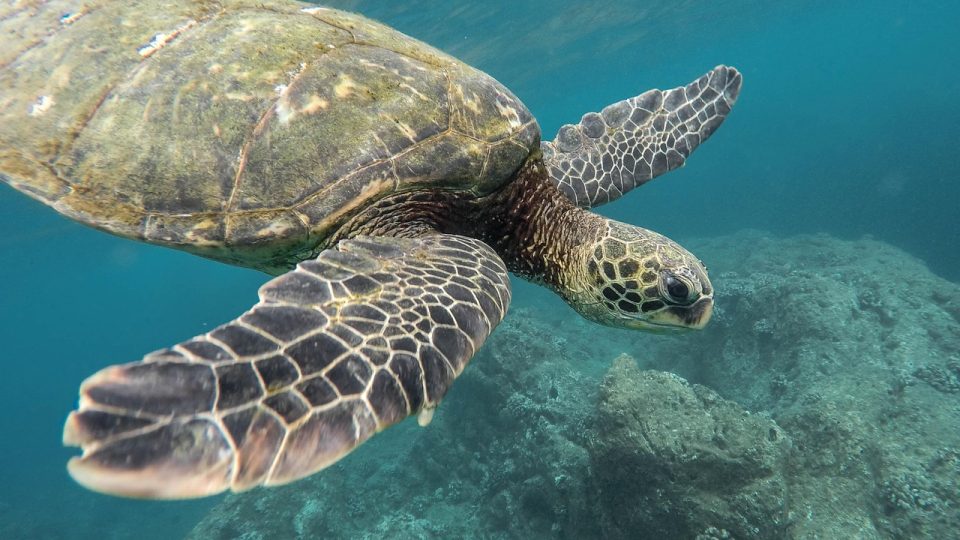
Picture this: a hungry turtle loves munching on seaweed way down at the bottom of the deeper waters, safely away from the coastline. But biology calls, and eventually, the poor creature has to jet up to the surface for a breath of fresh air. Boom—the exact moment it breaks the surface, the lurking shark spots it. We get treated to an incredible, multi-angle view of the escape thanks to an overhead drone and a mini camera strapped securely to the turtle’s back. Watch as the turtle bolts for the shallows, pulling off a lightning-fast sharp turn at the very last second that leaves the shark biting nothing but empty water while its teeth painfully glance off a very sturdy shell.
Of course, it isn’t all pure terror in the deep blue; we also need a bit of comic relief to lighten the mood. Cue the upbeat, bouncy soundtrack and a distinct touch of playful mischief in Attenborough’s voiceover delivery. Off we head to Indonesia to check out a pair of harlequin shrimp sporting ridiculous two-tone color schemes. They tumble around adorably, clumsily trying to figure out how to snack on a starfish. It’s hilarious to watch them bounce around like little aquatic jesters, though probably a lot less funny for the poor starfish getting one of its limbs aggressively yanked off by two prawns in fancy dress.
If that doesn’t make you chuckle, take a little trip over to the Brazilian mangroves, where we are treated to the obligatory, hilariously relatable look at the animal dating scene. Picture the messy, sludgy mud at low tide. A male fiddler crab is feeling himself, proudly waving his single oversized claw in the air to catch the eye of nearby females. The camera slowly pans back to reveal he is just one of hundreds of identical, muddy bachelors all frantically waving their prized appendages, desperately craving a moment of validation. Honestly? We have all been there, little buddy. The female fiddler crabs—complete with cartoonish, stalked eyes that pop up with skepticism and fold right back down—watch on with absolute, pitiless indifference as our poor protagonist gets dragged into a pointless pincer-measuring contest with a rival, completely loses focus, and promptly gets snapped up by a passing scarlet ibis.
A Sobering Reality Check
Naturally, the series isn’t all jokes and games. When Blue Planet III decides to shift gears and get serious, it hits with staggering, emotional force.
There is a heartbreaking segment featuring a diligent little clownfish tending to the sea anemone it calls home. The fish is working overtime, flapping its tiny fins vigorously to clean the tips of the anemone’s tendrils and pump oxygenated water into it. Why? Because a brutal marine heatwave is actively killing the anemone and the surrounding coral reef they both rely on for survival.
To really drive the point home, the show utilizes a devastating before-and-after edit filmed just months apart. The vibrant, breathtaking colors of a thriving reef literally melt away into a dead, uniform blackish-brown wasteland. It’s tough to watch, and it prompts Attenborough to deliver a plea that echoes warnings he has given us time and time again over the decades.
Yet, even amidst the tragedy, there remains a persistent flicker of hope. Witnessing the dedication of that tiny clownfish trying desperately to save its home makes you wish, more than anything, that humanity might finally listen to the wise conservationist.
As the great man notes, his voice weathered down to a poignant, fragile whisper:
“These tiny fish helped to protect their home. Imagine what we could achieve if we all worked together to protect ours.”
Until next time, stay curious, keep exploring, and take care of our big blue backyard!
source: theguardian.com (www.theguardian.com)