Cryosphere Faces Permanent Damage When World Overshoots 1.5C, Scientists Warn
Hey everyone, welcome back to the blog! Today, we need to talk about some pretty heavy news coming straight from the scientific community regarding our planet’s icy regions. We are all pretty familiar with the Paris climate agreement and its famous 1.5C warming limit. But lately, experts have been warning us about something called an “overshoot”—that uncomfortable period where global temperatures might temporarily spike past that target before we hopefully bring them back down.
Well, a brand-new United Nations-backed report has just dropped, and it is here to completely shatter a very dangerous misconception. There is a persistent myth floating around that letting global temperatures overshoot the 1.5C mark—say, pushing them up to 2C or even 3C—is somehow manageable, or that it is a better option than making painful, immediate cuts to our carbon emissions. Spoiler alert: the science says absolutely not, especially when it comes to the Earth’s frozen zones.
Let’s dive into what the report actually says, why the stakes are unimaginably high, and what this means for the future of our planet.
Understanding the Cryosphere and the Danger of Overshooting
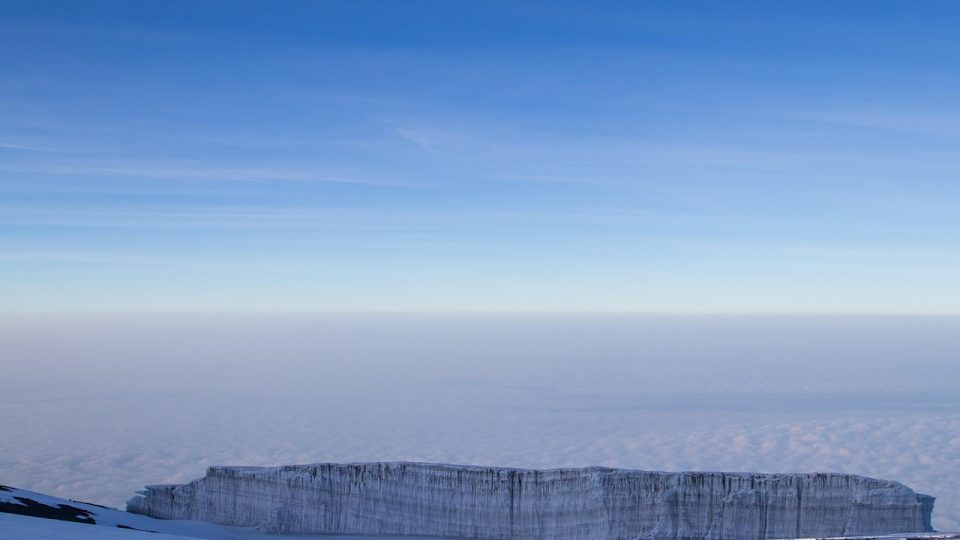
First off, what even is the cryosphere? In simple terms, it is essentially all the water on Earth that is currently hanging out in a solid state. We are talking about glaciers, snow caps, sea ice, and massive polar ice sheets. And according to the experts, the cryosphere is easily one of the most sensitive parts of our entire climate system.
Right now, the planet has already heated up by about 1.3C since pre-industrial times. Because governments and industries have failed to properly curb greenhouse gas emissions and safeguard nature up to this point, scientists have basically concluded that some level of a temporary temperature overshoot is practically inevitable as we try to cap end-of-century warming at 1.5C.
However, the new report—put together by a collaborative effort of 80 scientists brought together by the International Cryosphere Climate Initiative (ICCI) and the UN Environment Programme (UNEP)—makes it crystal clear that we need to keep any time spent above that threshold as short as humanly possible. Not only that, but we also need to actively pull enough planet-heating carbon out of the atmosphere to bring long-term global warming way down, ideally aiming for below 1C by the year 2150.
What Happens If We Let Temperatures Soar?
If current policies continue without dramatic changes, we are looking at a high overshoot scenario that could peak at around 3C of global heating. If that happens, the consequences for the cryosphere and the wider Earth system are downright staggering.
According to the findings, a 3C peak would cause nearly all near-surface permafrost to thaw out completely. It would also make severe and potentially abrupt disruptions to global ocean currents extremely likely, alongside triggering widespread ocean acidification. Plus, recent research shows that sea ice actually recovers a lot slower than researchers previously believed.
James Kirkham, a glaciologist with the ICCI and the lead author of the report, pointed out that the impacts of losing these frozen systems ripple out to affect the entire globe. He highlighted some terrifying real-world examples we have already witnessed recently. For instance, an area on the Nepal-China border saw one of the largest and most deadly ice rock avalanches ever recorded, which tragically killed thousands of people and caused economic damage equivalent to a massive chunk of Nepal’s GDP from just a single event.
Closer to Europe, Switzerland has watched a staggering 20% of its glacier ice vanish over just the last five years. Looking ahead, thousands of glaciers all over the world are expected to become completely extinct every single decade moving forward.
Irreversible Damage: The Permanent Toll on Ice Sheets
One of the most alarming takeaways from the UNEP and ICCI-backed report is that a huge portion of the damage done to the cryosphere will be entirely permanent. Even if we manage to pull global temperatures back down to 1.5C after an overshoot, the damage is essentially baked in. Glaciers will continue to melt, driving up sea levels and severely threatening regional water security.
The timing of this report aligns with world leaders and diplomats gathering in Turkey for the 31st annual Cop climate conference. The document outlines a rapid, accelerating meltdown of polar oceans and icy regions. The damages range from the loss of massive ice sheets in Greenland and Antarctica—which threatens hundreds of millions of people living near coastlines with rising seas—to thawing permafrost releasing even more greenhouse gases back into the atmosphere.
Even if long-term heating is miraculously brought back down to 0.8C, glaciers (which are still reacting to past warming) would only manage to hold onto about 70% of their current volume over the course of the next few centuries. Meanwhile, the giant ice sheets covering Greenland and Antarctica are currently melting about six times faster than they did back in the 1990s. Even in a best-case scenario where an overshoot is brief and temperatures return to 1.5C, these ice sheets will keep losing mass. The scientists emphasize that a genuinely safe, long-term temperature limit for these polar ice sheets is much closer to 1.0C of global heating, and potentially even lower.
As James Kirkham put it, snow and ice react instantly to every tiny fraction of a degree of warming. Unfortunately, once those systems cross certain tipping points, it takes centuries or even millennia for them to recover—if they ever do.
Regional Devastation and the Numbers We Can’t Ignore
Just last month, a separate UNEP report stressed that the world has to slash emissions by 18% by the year 2030, and by a massive 45% by 2035, just to give us a fighting chance of keeping temperatures from climbing past 1.7C above pre-industrial levels. That report bluntly stated there are simply “no good outcomes” of staying above the 1.5C mark.
The new cryosphere report puts hard numbers on what current policies will actually do to our favorite mountain ranges:
- Under current policies leading to 2.8C of global heating, the mass of glacier ice in the Rockies, the Alps, Iceland, and Scandinavia will shrink to below 10%.
- If warming could somehow be strictly limited to 1.5C, about 20% to 35% of that ice mass would manage to survive.
- In the Hindu Kush Himalayas, where glacial meltwater supports nearly a quarter of the entire human population, current policies will leave a mere 41% of the ice mass intact.
- Keeping warming to 1.5C would save about 83% of the ice mass in that crucial region.
Bill Hare, a prominent climate scientist and CEO of Climate Analytics who wasn’t personally involved in writing the report, didn’t hold back when sharing his perspective on the findings.
“Ice sheets melting six times faster than 30 years ago, sea ice and mountain glaciers disappearing at record speed, sea levels inexorably rising, the life-giving polar oceans acidifying: all irreversible now on human timescales, all laden with worldwide consequences, and all taking climate impacts past limits of adaptability,” Hare stated.
He added a blunt message directed at those in power: every single government minister and fossil fuel executive who has successfully worked to water down climate action over the years can look directly at this report and see the very real, fundamental damage their choices have caused to the world we all share.
It is definitely a sobering reality check for all of us following environmental news. The margin for error is shrinking rapidly, and the ice is literally slipping away beneath our feet. Let’s hope the leaders meeting at Cop take these warnings to heart. Stay tuned to the blog for more updates on this developing story, and let’s keep pushing for a more sustainable future!
source: theguardian.com (www.theguardian.com)
Photo by Squirrel_photos on Pixabay