Why Do Snakes Slither? And 9 More Wild Animal Mysteries That Still Baffle Science
Hey there, animal lovers and curious minds! Welcome back to the blog. Today, we are taking a deep dive into some of the coolest, weirdest, and most fascinating secrets of the animal kingdom. Mother Nature has been doing her thing on this planet for millions of years, and honestly, she still manages to keep a ton of secrets from us. Even with all our fancy modern science, high-tech labs, and dedicated researchers wandering around swamps and forests, there are still massive gaps in our knowledge.
Think about it: scientists have officially identified and cataloged more than 1.5 million different zoological species on Earth right now. And here is the real kicker—researchers firmly believe there are at least as many enigmas out there waiting to be solved. That is millions of walking, swimming, flying, slithering puzzles running around our globe!
To celebrate the glorious unknown, we are looking at 10 of the most intriguing animal mysteries out there. Grab a snack, get comfortable, and let’s explore some of the coolest questions that biologists are still desperately trying to answer.
1. Why Did Snakes Lose Their Legs?
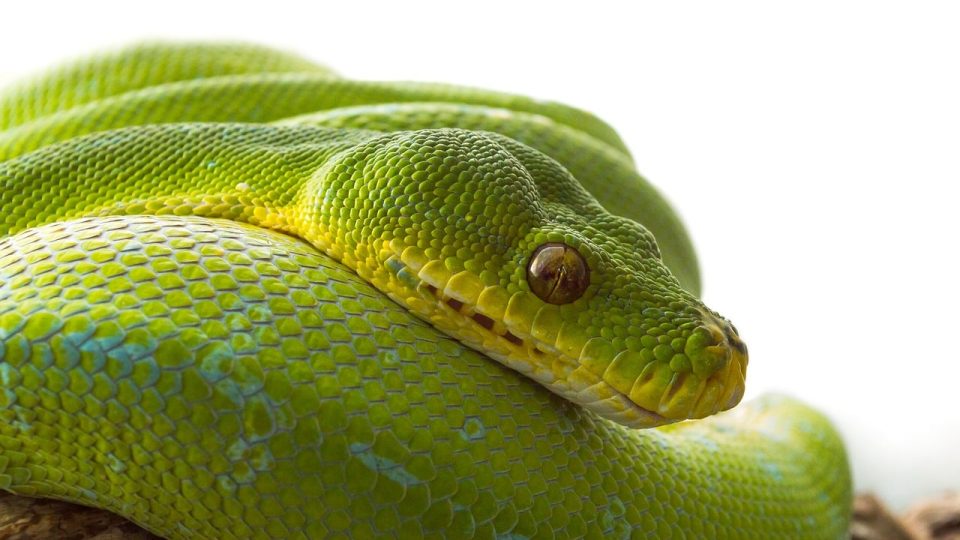
Let’s kick things off with a classic evolutionary head-scratcher. Every time you see a snake gracefully (or terrifyingly) slither across the ground, have you ever wondered what happened to its legs? Millions of years ago, the ancestors of modern snakes clearly walked around on four limbs just like plenty of other reptiles. So, why on earth did they ditch the legs entirely? Was it an upgrade for squeezing into tight underground burrows, or did they find a better way to get around without tripping over their own feet? Evolution is wild, but this particular design choice still keeps scientists guessing about the exact environmental pressures that made leglessness such a great idea.
2. How Do Birds Navigate Migrations Across Continents?
Have you ever looked up at the sky during a seasonal change and thought, “How do they know where they are going?” Migratory birds pull off incredible feats of navigation every single year, traveling thousands of miles across oceans, mountain ranges, and sprawling continents to reach the exact same nesting spot they left the previous year. How do they map it out? Do they read the stars like tiny, feathered pirates? Do they feel the invisible magnetic pull of the Earth? While we know they use a mix of environmental cues, the exact internal GPS system that guides them precisely across the globe remains one of nature’s greatest travel secrets.
3. What is the True Purpose of Zebras’ Stripes?
Zebras look amazing—there is no denying that their high-contrast black-and-white fashion statement is iconic. But what are the stripes actually *for*? For the longest time, people assumed it was purely for camouflage in the tall grass. But as it turns out, lions and other predators can spot them just fine. Other theories suggest the stripes act as a built-in bug repellent to confuse pesky biting flies, or perhaps they help with body temperature regulation under the baking sun. Even with plenty of studies, researchers still debate the ultimate evolutionary checklist for why zebras wear such a bold pattern.
4. How Do Humpback Whales Talk Across the Ocean?
The ocean is a loud place, but humpback whales take communication to an entirely different level. These magnificent marine giants sing complex, haunting melodies that can travel vast distances underwater. But what are they actually saying to each other? Are they sharing gossip about the best krill feeding grounds, telling epic stories, or navigating romantic matchmaking? While marine biologists can record and analyze the hypnotic frequencies of these oceanic ballads, translating the exact meaning behind the whale chatter is still a massive work in progress.
5. Why Do Cats Purr?
Cat owners know the absolute bliss of sitting on the couch while a feline friend curls up in their lap and starts purring away. It sounds like the ultimate expression of contentment and happiness. But here is the twist: cats also purr when they are stressed, scared, giving birth, or recovering from an injury. What is going on there? Some scientists suggest that the specific low-frequency vibration of a purr acts as a self-soothing mechanism, helping to heal bones and tissues. It turns out our cute little house cats might possess a built-in biological healing frequency that we are only just beginning to understand.
6. How Do Geckos Defy Gravity?
Lizards are cool, but geckos are basically the superheroes of the reptile world. Have you ever watched a gecko casually sprint straight up a polished glass window or hang upside down from a smooth ceiling as if gravity didn’t even apply to them? For a long time, people wondered if they used some kind of sticky glue or microscopic suction cups. Scientists eventually discovered it is all about van der Waals forces—subatomic interactions between molecules on their toe hairs and the surface they are climbing. Even knowing the physics, though, the sheer mechanics of how they turn this grip on and off instantly at a dead sprint is a marvel of biological engineering.
7. What Makes Elephants Mourn Their Dead?
Elephants are famous for having incredible memories, but their emotional lives might be even more profound than we realized. When an elephant passes away, members of its herd often react with deep, visible sorrow. They will stand vigil over the body, gently touch the bones with their trunks, and return to the site long after the event has passed. It looks remarkably like human grief and mourning rituals. But how deeply do they comprehend mortality? Are they processing loss the same way we do? The emotional depth of these gentle giants continues to challenge our understanding of animal consciousness.
8. Why Do Octopuses Have Such Complex Minds?
Octopuses look like visitors from an entirely different planet. They have three hearts, blue blood, no bones, and the ability to change the color and texture of their skin in the blink of an eye. But what really blows researchers’ minds is their intelligence. They can solve complex puzzles, use tools, and squeeze through impossibly tiny openings. Since their evolutionary branch split from ours hundreds of millions of years ago, their incredible problem-solving brains developed completely independently from ours. Why did an invertebrate sea creature evolve such staggering cognitive power? That is one big marine mystery.
9. How Do Honeybees Perform the Waggle Dance?
If you want to see a masterclass in effective communication, just watch a honeybee. When a scout bee finds a fantastic new patch of flowers, it returns to the hive and performs a very specific, high-energy wiggle dance. Believe it or not, this little routine communicates the exact direction and distance of the food source relative to the sun to the rest of the colony. How did bees evolve a symbolic mathematical language system to share spatial coordinates through dance? It is a mind-boggling display of insect brilliance that continues to amaze entomologists.
10. Can Animals Predict Natural Disasters?
There are countless historical accounts and modern stories of pets acting strangely right before an earthquake hits, or wild animals fleeing for the hills hours before a tsunami or volcanic eruption. Do our furry and feathered friends possess a secret sixth sense for impending natural disasters? Some researchers think they might be picking up on subtle atmospheric changes, microscopic vibrations in the earth, or shifts in groundwater long before our instruments register a thing. While scientists are working hard to crack this code, the exact mechanism behind this uncanny animal instinct remains unconfirmed.
Well, folks, that wraps up our quick look at 10 of the most captivating mysteries in the animal kingdom! It just goes to show that no matter how much we think we know about the world around us, nature always has a few surprises up her sleeve. Which of these animal puzzles do you find the most fascinating? Let us know, keep exploring, and we will catch you in the next post!
source: nytimes.com (www.nytimes.com)