European Troops Set to Practice Ukraine Deployment for Future Peace
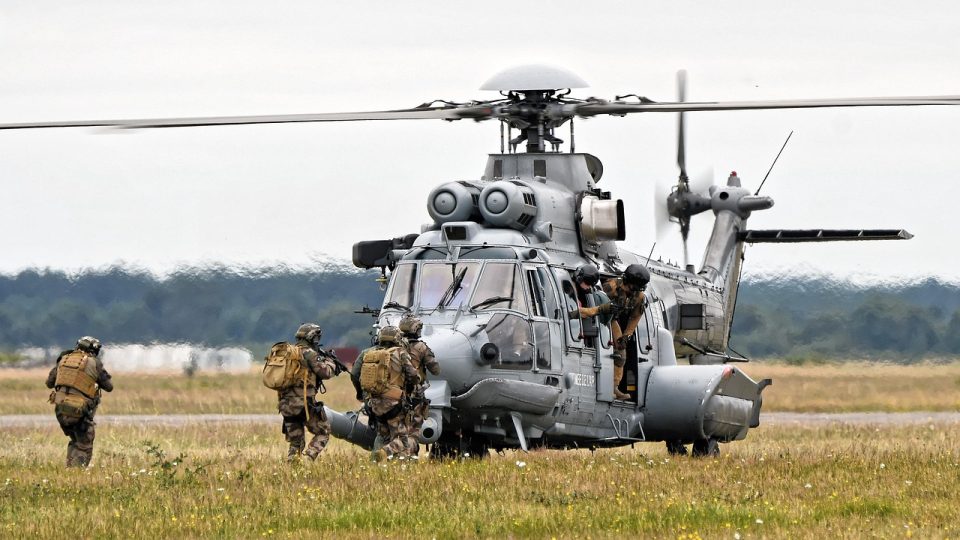
Image_QUERY: military exercise troops training
Category: World
Hey there, folks! Grab a cup of coffee and settle in because we need to talk about what’s happening on the military front in Europe. Even though the conflict in Ukraine is still raging on with no immediate end in sight, European leaders are already looking ahead to the future. Specifically, they are making concrete preparations for the day peace finally arrives.
According to recent updates, the UK and France are stepping up to lead a major military exercise. The goal? To test how a multinational force could be deployed to Ukraine if a peace deal is ever reached. It sounds like something straight out of a strategic planning handbook, but it’s happening right now.
Let’s dive into the details of what these drills will look like and what Western officials are saying about this ambitious plan.
Practicing for Peace Just Across the Border
Later this month, nearly 3,000 military personnel hailing from a dozen European nations will head over to neighboring Poland to take part in this large-scale rehearsal. The initiative itself dates back to last year, when plans for a reassurance force for Ukraine were first introduced as part of long-term security guarantees proposed by European allies.
Now, those plans are moving from paper into active practice. Exercise Koalicja—scheduled to run from November 9 to November 22—is designed to test the logistics of moving, protecting, and supplying a military force in Ukraine. It will also put command and control systems to the test, ensuring that troops from different countries can seamlessly work together.
The numbers involved give a good sense of the scale. Around 2,800 military personnel will participate across land, sea, and air operations. The UK is sending a contingent of 300 troops along with a pair of RAF Typhoons. Interestingly, these fighter jets will actually simulate how they can reassure commercial aircraft once the skies over Ukraine are eventually deemed safe to reopen.
Meanwhile, Turkey has stepped up to lead the maritime portion of the mission. The ultimate objective for the naval side of things is to clear out dangerous mines and pave the way for trade to resume safely in the Black Sea.
Along with the UK and France, the participating nations read like a who’s who of European defense cooperation. Troops are coming from Belgium, Estonia, Germany, Lithuania, the Netherlands, Poland, Spain, Sweden, and Turkey. The United States has been looped into discussions about the initiative, but they won’t actually be contributing any personnel to the mission itself.
What Will This Force Actually Do?
If you’re wondering what these troops would be up to on the ground, Western officials have been pretty clear about what is—and isn’t—on the table. There are still plenty of questions about how a deployment would function in the real world, but some boundaries have been firmly drawn.
First off, western officials emphasize that any international force sent to Ukraine won’t be taking part in offensive operations. They also won’t be acting as peacekeepers or monitoring a ceasefire. On top of that, these troops wouldn’t operate under the direct command of NATO, nor would they be stationed on the front lines.
Instead, the stated purpose of their presence is twofold: to offer reassurance to Ukraine and to assist in rebuilding its armed forces once the fighting stops. UK Defence Secretary Wes Streeting pointed out that this is far from just a hypothetical idea. He noted that it’s a real force being prepared to help Ukraine the moment active combat ceases.
Lieutenant General Tom Bateman, the UK commander of the Multi National Force for Ukraine, echoed those sentiments. He described the upcoming exercise as a crucial milestone in turning political promises into actual, credible military readiness. He called it a capable and readily deployable force that highlights a serious commitment from a coalition of willing nations to support Ukraine’s long-term stability and security.
The Big Unknowns and Moscow’s Reaction
Of course, no situation involving international security is entirely straightforward, and this plan comes with its fair share of question marks.
For one thing, Western officials admit that they can’t yet predict the exact final shape or composition of a force that might eventually head to Ukraine, since everything depends on the specific circumstances of how hostilities might end and what individual governments decide politically. Historically, some military experts have guessed that Western nations might need to commit tens of thousands of troops to truly guarantee security in the region.
There are also fascinating logistics to consider, like what kind of training Western forces could realistically provide to a Ukrainian military that has already become battle-hardened and is actively sought out by NATO forces looking to learn modern skills, particularly in drone warfare.
And then, of course, there is the reaction from Moscow. Russia has made it abundantly clear that it strongly opposes the idea of foreign troops being stationed in Ukrainian territory. Last year, President Vladimir Putin explicitly warned that any such forces would be viewed as legitimate targets.
When asked about the rules of engagement if international troops were ever attacked while stationed in Ukraine, Western officials kept their cards close to their chests and declined to spell out the exact protocols, though they maintain that the force would inherently possess the right to defend itself.
Right now, despite these preparations, Russia has shown zero indication that it is ready to bring the war to an end. But as Exercise Koalicja gets underway this month, Europe’s message is that they are at least trying to stay a few steps ahead, quietly laying the groundwork for a more secure tomorrow whenever that day finally arrives.
That is all for today’s update, folks! Keep your eyes on the news, take care of yourselves, and I’ll catch you in the next post!
source: feeds.bbci.co.uk (www.bbc.co.uk)
Photo by Dylan_Agbagni on Pixabay