Lebanon Pulls the Plug on Public Agencies as Energy Woes Deepen
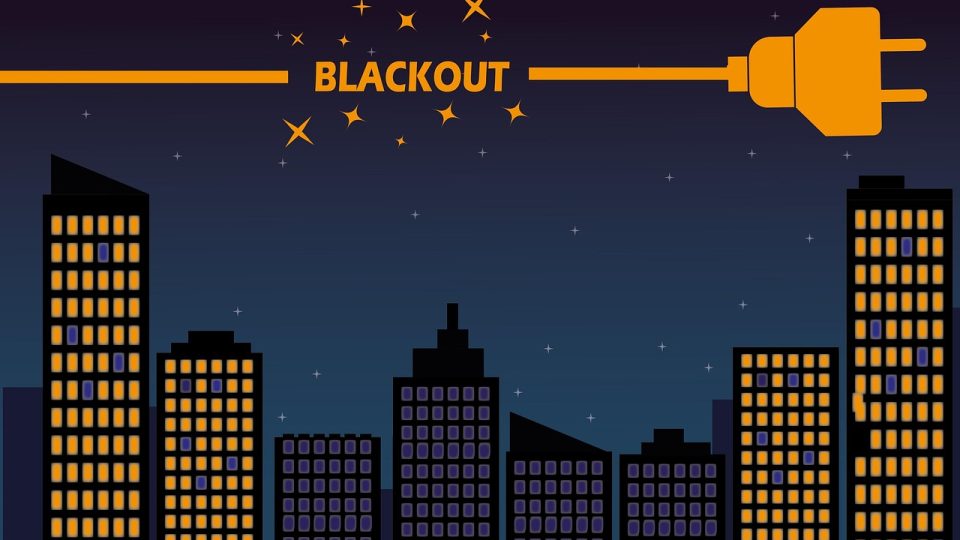
Hey everyone, let’s talk about what’s going on in Lebanon right now, because the situation over there has taken a really frustrating turn. If you’ve been keeping an eye on the news, you probably know that Lebanon hasn’t had the easiest time with public utilities lately. But things have officially escalated in a big way. The Ministry of Energy and Water has actually started cutting off electricity to around 100 public institutions. Why? Simply because they haven’t paid their bills.
This dramatic move didn’t just happen out of nowhere. It’s part of a growing feud between Energy Minister Joe Saddi and the rest of the government. Saddi has been pulling away from cabinet meetings lately. His argument is that the government is totally ignoring his demands to boost the power supply, cut down on crazy fuel costs, and finally clear out those unpaid state electricity bills. It’s a messy political showdown, and ordinary people are the ones stuck dealing with the fallout.
A Long History of Darker Days
Truth be told, Lebanon’s power struggles aren’t brand new. People there have been dealing with rolling blackouts for years. However, things took a massive nosedive back in 2019 following a severe economic and banking crisis. Remember when folks in Beirut used to get around 21 hours of state-provided power every day? Well, those days are long gone. Recently, that number plummeted to just two to four hours daily, and sometimes neighborhoods are left sitting in total darkness for an entire 24 hours.
When a reform-minded government stepped in back in early 2025, a lot of folks held onto a sliver of hope that things might finally get fixed. But here we are, more than a year and a half later, and state power supplies are still pitifully low. Meanwhile, inflation and energy costs are skyrocketing. The World Bank is even projecting that year-on-year inflation in Lebanon will hit 17.5 percent this year.
The Rise of the Alternative Generator Economy
When the government can’t keep the lights on, people find a way to adapt—even if it’s crazy expensive. Over the years, a whole alternative economy has popped up. Locals now rely heavily on private generators just to keep their fridges running and lights on. A lot of these generators are run by political parties or well-connected individuals.
Unfortunately, global conflicts haven’t helped. The fuel costs tied to the United States-Israel war on Iran have caused diesel prices to soar. Since these private generators gulp down massive amounts of fuel, the costs for everyday Lebanese families have gone through the roof. Energy experts note that the country is leaning on super expensive diesel while relying on ancient, crumbling power plants. Clearly, slapping a temporary band-aid on the issue just isn’t going to cut it anymore.
Analysts point out that the root of the problem goes way deeper than just a temporary shortage. Corruption is eating away at the entire supply chain, running into the billions of dollars. And as energy expert Jessica Obeid points out, that kind of deep-seated corruption is not something that vanishes overnight.
The political drama around all this is heating up, too. Saddi, who belongs to the right-wing Lebanese Forces (LF) party, has been turning up the heat. When the draft 2027 budget came out in October, he and his party loudly objected, saying the electricity sector was being completely sidelined. To make his point, Saddi started boycotting cabinet meetings, and eventually, three other ministers from his party joined him in solidarity.
Economists like Sami Zoughaib, who works at a Lebanese think tank called The Policy Initiative, suggest this boycott is heavily strategic. He notes that Saddi and his party are probably just trying to avoid losing public backing. If they completely flop while running the energy portfolio, winning it back in the future will be nearly impossible. Political rivalry is also in play here, with critics pointing fingers at past ministers who also failed to deliver on promises of 24-hour electricity.
Is Help on the Way?
Amid all this gloomy news, there might be a small glimmer of hope on the horizon. Qatar has recently stepped in to offer a helping hand. Last month, Qatar’s Prime Minister Sheikh Mohammed bin Abdulrahman bin Jassim Al Thani took a trip to Beirut and chatted about setting up a major energy partnership, which includes a solar power project.
Reuters even reported that Doha has offered to build two brand-new power plants over the next three years, along with a massive 20-year liquefied natural gas supply deal. If that agreement actually gets approved, it could be a total game-changer for Lebanon’s struggling energy sector.
Even so, experts warn that a new deal alone won’t solve everything. The country needs total structural reforms. Lebanon’s energy infrastructure is so old and damaged that the old pre-2019 model of state-subsidized power simply eats up way too much of the government budget. Zoughaib emphasizes that the state cannot afford to recreate the past; they have to build a totally new, sustainable framework.
Why Investors Are Hesitant
Minister Saddi has previously tossed around the idea of bringing in private investors through public-private partnerships. It’s a strategy that works in many parts of the world, but Lebanon faces unique hurdles.
First off, the country lacks stability. With repeated attacks and the constant threat of more conflict, investors are naturally going to steer clear. On top of that, Lebanon has been a bankrupt nation for at least seven years without making any real moves to fix its broken financial and banking sectors. Without a genuine political will to reform, the risks for anyone wanting to invest money there remain sky-high.
Experts emphasize that successive governments have repeatedly opted for short-term political wins instead of tackling the hard work of rehabilitating the grid. As Obeid puts it, fixing Lebanon’s power issues isn’t like inventing a brand-new technology. It’s a small country that simply needs a clear vision and leaders brave enough to make some bold, necessary decisions.
We’ll definitely have to keep an eye on how this public utility cutoff plays out and whether the government can pull things together before the grid completely gives out. Stay tuned for more updates as this story develops!
source: aljazeera.com (www.aljazeera.com)
Photo by Alexandra_Koch on Pixabay