North America’s Favorite Game Bird Faces Troubling Times Ahead
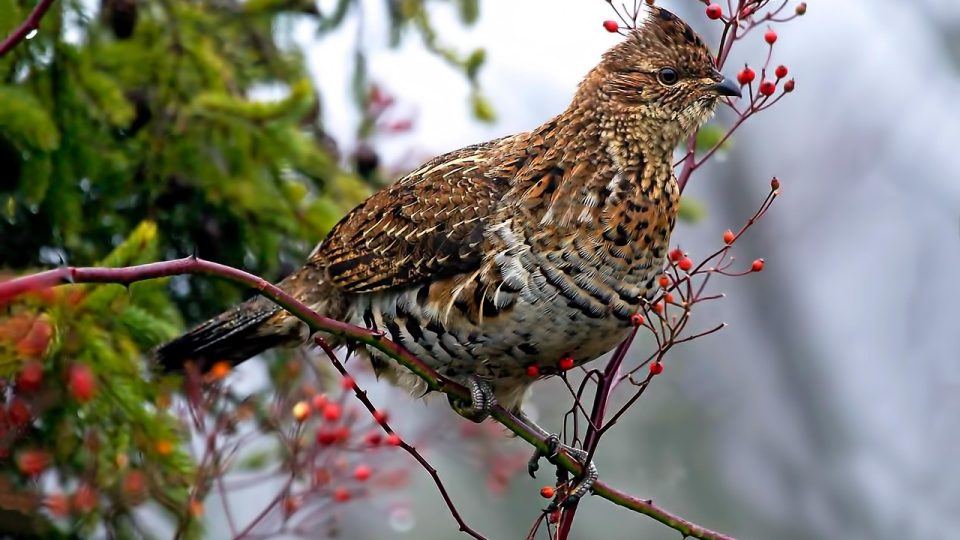
Hey there, fellow nature lovers and blog readers! Today, we are diving into a bit of a concerning wildlife story that has been unfolding quietly across parts of North America. If you are into outdoor traditions or just care about keeping our ecosystems thriving, this one might catch your attention. We are talking about the ruffed grouse—a bird that holds a pretty legendary status among hunters and wildlife enthusiasts alike.
Now, if you are not entirely familiar with this bird, the ruffed grouse is basically the rockstar of North American game birds. They have a massive historical range, spreading all the way from the rugged southern Appalachian mountains up to the chilly landscapes of Alaska. Every single November, folks who love the outdoors—and a good challenge—traditionally head out into designated wilderness areas to track them down. They are famously tough little birds, known for being able to withstand fierce winter weather that would completely overwhelm many other avian species. Plus, if you are ever out in the woods during spring mornings, you might hear the males doing their iconic “drumming” sound by beating their wings against their chests while perched on a log. Pretty cool, right?
Unfortunately, things are looking a bit rough for them right now. In a major move, Ohio has officially decided not to issue any open permits to hunt ruffed grouse for the public. This marks a massive historical shift, as it is the first time this has happened since way back in 1937. The decision didn’t come out of nowhere; it is the direct result of sliding bird populations across the state.
Where Have All the Grouse Gone?
If you are wondering how officials keep track of creatures that are famously wild and notoriously difficult to breed in captivity, it mostly comes down to dedicated monitoring by local wildlife departments and hunters. In Ohio, biologists look at roadside drumming surveys to gauge how the population is doing. According to Mark Wiley, who works as a forest gamebird biologist for the Ohio department of natural resources, these surveys clearly show that grouse numbers remain quite low throughout the eastern and southern parts of the state.
While the state doesn’t track exact headcounts, hunters keeping track of drumming counts have seen their numbers plummet. Today, those counts have dropped to less than one percent of what they were back in the early 1980s. When you look at the bigger regional picture, Ohio is certainly not alone in this struggle.
Take Indiana, for instance. About six years ago, the ruffed grouse was added to that state’s endangered list, and experts believe they only manage to survive in around 12 counties there now. Indiana’s hunting season had to shut down completely back in 2015. Shortly after, New Jersey followed a similar path, ending their ruffed grouse hunting season four years later due to the exact same downward trends. Karl Malcolm, representing the conservation and advocacy group known as the Ruffed Grouse Society, put it pretty bluntly, mentioning that the long-term storyline here is undoubtedly a steady decline of the species.
The Double Threat: Mosquitoes and Changing Habitats
So, what exactly is causing these tough times for such a resilient bird? Wildlife experts point to a couple of major culprits: a severe shortage of proper habitats and the expanding reach of the West Nile virus.
You might be wondering how a virus typically associated with mosquitoes ends up hurting forest birds. Well, the disease is carried by mosquitoes that feed on bird blood, and research shows it can be detected in more than 320 different bird species. Raptors and corvids are known to be especially susceptible to it. For example, back in 2023, heavy early summer rains in northern Colorado led to dozens of hawks falling seriously ill from the virus.
Normally, long and freezing winter conditions act as a natural barrier, preventing mosquitoes from migrating further north. However, human-activated climate change has brought us warming temperatures and much milder winters, changing the game completely. We are now seeing a shift in both altitude and topography. Mosquitoes are pushing farther north and moving right up into upland, mountainous areas—including the higher elevations of New York and Pennsylvania, which used to be safe strongholds for the grouse population.
Data analyzed by Climate Central, a nonprofit news organization, backs this up. Since 1979, the Ohio valley and the northeast regions of the United States have seen a bigger increase in “mosquito days”—days with enough humidity and warm temperatures to keep the pests active—than anywhere else in the country. To make matters worse, infected birds can actually act as a virus amplifier, passing the sickness along to other mosquitoes that weren’t infected before.
Aside from disease, the landscape itself is changing under the grouse’s feet. These birds thrive best in open spaces featuring young tree growth. Across Appalachia and the midwest, however, forests are steadily maturing, meaning that young woodland areas are becoming harder and harder to find. In fact, a report from the Cornell Land Trust Bird Conservation Initiative notes that total birdlife in the country’s eastern forests has dropped by a staggering 27%.
Impacts on Rural Communities and Economies
The struggles facing the ruffed grouse are not just an ecological concern; they also ripple out into local economies, particularly in rural areas that rely heavily on outdoor recreation. Hunting contributes nearly $2 billion to Ohio’s economy alone, and the vast majority of that financial support stays right in rural towns. Most of the state’s grouse hunting historically centered around Appalachian counties, which happen to feature some of the lowest income levels in the whole state.
Figures from the Ohio division of wildlife show that between 1993 and 2014, the proportion of licensed hunters actively pursuing the bird dropped dramatically from 13% down to a mere 2%. While the biggest populations of ruffed grouse are currently found in northern states like Wisconsin, Michigan, and Minnesota, those exact regions have also experienced some of the highest levels of warming between 1970 and 2025.
Take northern Wisconsin, often celebrated as the ruffed grouse capital of America. A study published in 2022 by the Wisconsin department of natural resources found that hunting the bird generated roughly $7.5 million in economic output. In Park Falls, Wisconsin, folks like Terry and JoAnn Ides have spent decades—since the 1970s—running guided grouse and woodcock hunts through local rolling swamp forests. Every fall, their family business guides around 100 clients.
Right now, the couple feels relatively optimistic about their local area, noting that they haven’t seen major impacts from the virus yet. Terry mentions that they sent in numerous samples to be tested and did not find themselves to be a hotspot for the disease. Even so, the first recorded case of the virus in Wisconsin this year was discovered in a wild bird just an hour’s drive away from Park Falls.
Plus, unusual weather patterns are already messing with hunting season dynamics. JoAnn points out that warm autumn temperatures have kept the birds hanging out high up in the trees where they can catch a breeze to cool down, making it significantly harder for hunters to track them down near the ground.
Connecting People Back to Nature
As we look at these complex challenges, experts like Karl Malcolm—who holds a doctorate degree in forest and wildlife ecology—believe part of the broader issue is a cultural disconnect. He points out that modern society is drifting away from having a direct, hands-on relationship with the natural landscape. Many people nowadays tend to view nature through a very narrow lens, assuming the only two options are to either completely leave it alone or accidentally mess it up.
The reality on the ground, however, is much more nuanced. There are plenty of active, thoughtful things we can do to make our lands healthier and more supportive of native wildlife. Whether it is supporting smart conservation efforts, understanding the balance of local ecosystems, or simply paying attention to how our climate is shifting around us, keeping an eye on stories like the ruffed grouse reminds us just how interconnected everything really is.
What are your thoughts on how changing climates and environments are impacting wildlife in your local area? Let us know down below, and as always, thanks for stopping by to read the latest updates. Stay curious, and see you in the next post!
source: theguardian.com (www.theguardian.com)
Photo by Canadian-Nature-Visions on Pixabay