Four Oil Tankers Destroyed by Naval Mines in the Strait of Hormuz, IRGC Claims
Hey everyone, welcome back to the blog! If you have been keeping an eye on international headlines lately, you know things are looking pretty tense in the Middle East. A brand-new update has just dropped, and it involves some serious drama in a very crucial body of water. Let’s break down what is going on and why everyone is talking about it.
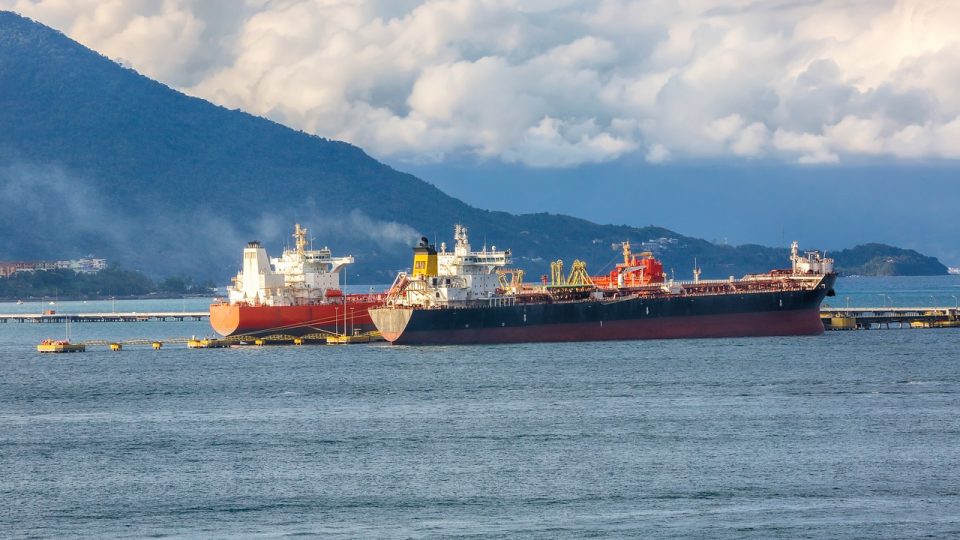
According to recent reports coming out of the region, things are heating up rapidly. Iran’s Islamic Revolutionary Guard Corps, commonly known as the IRGC, announced on Wednesday that a total of four oil tankers were completely destroyed after striking naval sea mines. If that wasn’t dramatic enough, they also stated that two of those vessels were still actively burning, while an additional two tankers had reportedly been seized.
Now, where did this happen? The IRGC claims these ships were attempting to navigate through a restricted southern route located right in the Strait of Hormuz. For those who might not know, this strait is one of the most vital shipping lanes for global oil supplies, making any disruption here a huge deal for the entire world. However, it is important to keep in mind that these claims from the IRGC haven’t been independently verified just yet, but they certainly add fuel to an already blazing fire.
This whole situation unfolds right on the heels of other major military actions. Just a day prior to these announcements, US officials confirmed that the US military had launched strikes on Iran—specifically targeting Qeshm in response to the IRGC firing on a US aircraft. The IRGC also reported earlier in the week that three other tankers had hit mines, and claimed they even managed to shoot down an MQ-9 drone hovering over the Strait.
Meanwhile, politics on the home front in the United States have added another layer to this complicated puzzle. US voters recently headed to the polls for the midterm elections and, as it turned out, punished Republicans at the ballot box. This prompted reactions from Iranian officials, including their top negotiator and parliamentary speaker, Mohammad Bagher Ghalibaf. Taking to social media, Ghalibaf suggested that the midterm results clearly showed Americans were saying a collective “no to war,” whether driven by conscience or concerns over the cost of living.
He didn’t stop there, though. Ghalibaf issued a stern warning, stating that if the US government decided to betray the will of its public, it would learn that Iran’s refusal comes with a serious price. On the American side, US President Donald Trump acknowledged that the poor performance of Republican congress members was tied, at least in part, to the ongoing conflict with Iran and the resulting spikes in gas prices. Even so, Trump maintained that he did not regret launching the military actions, telling reporters that the conflict would come to an end whenever he decides it ends.
Speaking to the media ahead of the elections, Trump also mentioned he was quite satisfied with the current state of affairs and didn’t even view the situation as a “real war.” When questioned about remarks from Israeli leader Benjamin Netanyahu regarding a potential upcoming attack on Iran this week, Trump kept his cards close to his chest, noting that they were ready if needed, though it might not even be necessary. During a later appearance, he emphasized a primary objective: ensuring that Iran will never possess a nuclear weapon.
Diplomatic efforts to cool things down have been practically non-existent. Talks aimed at ending the conflict—which originally kicked off following joint US-Israeli strikes back in February—have been stalled for months with zero signs of a breakthrough. During a parliamentary session, Ghalibaf doubled down on his stance, declaring that Iran has no intention of surrendering and putting the onus squarely on the US to prevent further escalation.
On the other hand, Iranian President Masoud Pezeshkian offered a slightly different tone, emphasizing that his administration has consistently tried to solve the ongoing crisis through peaceful dialogue. He pointed out a very clear truth: that absolutely no one stands to benefit if the fighting flares up and restarts.
As a reminder, Iran previously closed off the Strait of Hormuz in direct response to the initial attacks. Officials have stated that the vital shipping route will only be reopened if the United States agrees to the terms laid out in their peace plan. According to foreign ministry spokesperson Esmaeil Baghaei, their seven-step peace proposal has been streamlined and could theoretically be put into action in just two days if the US gives the green light.
It is definitely a heavy news cycle, and developments are moving fast. Make sure to stay tuned right here for any further updates as this situation continues to unfold. Thanks for reading, and see you in the next post!
source: feeds.bbci.co.uk (www.bbc.co.uk)
Photo by Marcos-Photographer on Pixabay