How the Palestinian Flag Became a Symbol Across European Street Protests
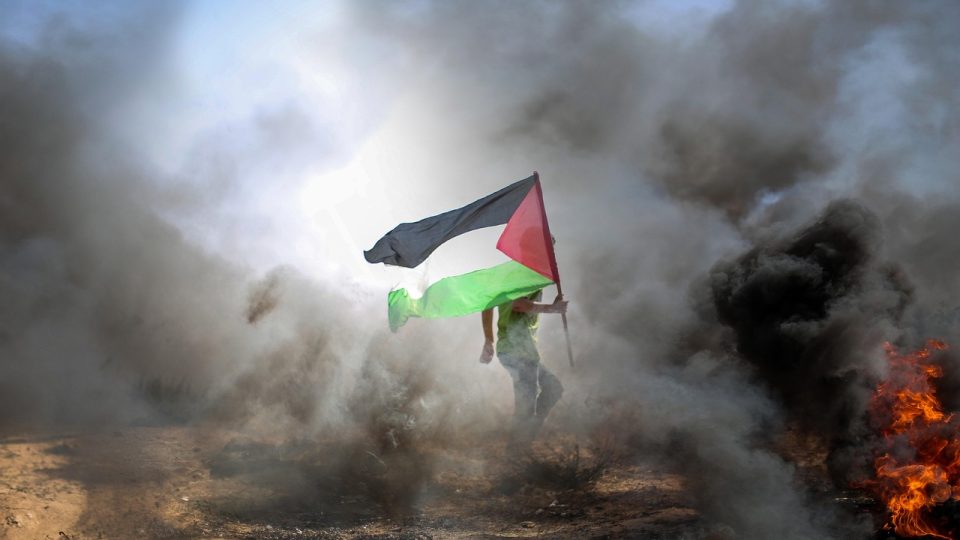
Hey everyone! Welcome back to the blog. Today, let’s talk about a fascinating and very visible trend happening across the streets of Europe right now. If you have been keeping an eye on the news, scrolling through social media, or even walking past a local demonstration lately, you might have noticed a very specific pattern. No matter what the protest is actually about—whether people are marching because rent is too damn high, tuition fees are going up, or the cost of living is crushing working families—there is a high chance you will spot a familiar sight: the red, green, white, and black Palestinian flag, along with the iconic black-and-white keffiyeh scarf.
It is definitely something that makes you pause and think. How did a symbol so deeply tied to a specific Middle Eastern conflict end up front and center at rallies about local European economic issues? Let’s dive into what is going on, why activists are bringing these symbols along, and why this trend is actually sparking quite a bit of debate among experts, politicians, and even Palestinians themselves.
From Housing to Classrooms: A New Global Protest Uniform
Lately, across various European nations, public demonstrations have taken on a distinctly international flavor. In Northern Ireland, for instance, these symbols have popped up in areas where historical tensions are always bubbling just beneath the surface. Over in Belgium, activists at universities are making sure the flag has a prominent home in their movements.
According to Kenny Pierre Agboton, who is involved with the Free University of Brussels for Palestine platform, flashing the Palestinian flag isn’t just a random choice. He explains that it serves as a broad nod toward anti-colonialism and a general pushback against repression. In his view, people in Western Europe are starting to see the Palestinian cause as a sort of crossroads where all their different local fights meet—whether that fight is about climate change, economic survival, or a liveable planet. His group even makes it a point to hand out flags to partner associations during nationwide rallies.
Just across the border in France, massive student-led rallies have been sweeping the country. What started as frustration over problems within the French education system quickly ballooned. High schoolers, backed by teachers, university students, trade unions, and some political figures, are demanding better funding, more teachers, smaller classrooms, and affordable education. And right there in the middle of the marches? Students rocking keffiyehs and waving the Palestinian flag.
Alice Cohen-Morzadec, a spokesperson for the French Student Union who frequently joins these protests, feels that the flag represents much more than just a distant geopolitical issue. For her, it connects the daily struggles happening in Gaza and the occupied West Bank to broader inequalities around the world. Young people, she argues, realize that these protests aren’t just about local complaints; they are pushing back against a global capitalist and colonial system that they feel is actively attacking their rights.
Politicians Weigh In
Of course, it isn’t just students and grassroots activists bringing these symbols into the spotlight. Some political figures have jumped into the mix as well, pointing out a long history of politicians wearing or displaying the keffiyeh. Back in 1990, the legendary Nelson Mandela wore one. Years later, in 2006, former Spanish Prime Minister Jose Luis Rodriguez Zapatero briefly wore a keffiyeh after a young Palestinian reportedly placed it around his neck.
Mario Furore, an Italian member of the European Parliament belonging to the Five Star Movement, has been quite vocal about defending the presence of the flag. He asks a straightforward question: what is actually wrong with a regular citizen taking to the streets with a Palestinian flag? He suggests that people shouldn’t be clutching their pearls or feeling outraged by the flags, especially considering the massive civilian death toll and accusations leveled against the Israeli government regarding its military operations in Gaza and the West Bank.
Not Everyone’s Buying the Connection
However, this anti-colonial messaging and political realpolitics don’t play the same way everywhere in Europe. Take Albania, for example. Fatos Lubonja, an activist and writer who spent nearly two decades imprisoned during the country’s communist regime, notes that he has been one of the very few people carrying the Palestinian flag or wearing a keffiyeh during recent anti-corruption demonstrations in his Muslim-majority country.
He explains that in Albania, the local historical context creates a completely different lens. For many Albanians, the Palestinian struggle gets unfairly lumped into religious narratives involving the Ottoman Empire, which they view as historic occupiers. Because the country fought to break away from Ottoman rule and prioritized integrating into Western Europe and NATO after the fall of communism, public sentiment leans heavily pro-American. And in that political ecosystem, being pro-American often translates directly to being pro-Israel, making Palestinian solidarity much harder to pitch to the general public.
Moreover, seeing the flag waved at every single type of European protest doesn’t sit well with everyone—even among those who deeply care about the Palestinian cause. Some protests have unfortunately involved violent agitators who also brandished these same symbols, muddying the waters for peaceful demonstrators.
The Dilemma for Palestinians
This brings us to a really important perspective: how do Palestinians themselves feel about their national flag being borrowed for every single European grievance under the sun?
Palestinian writer and researcher Waddah Abu Jamea penned an article expressing a deep sense of discomfort watching all of this unfold from afar. He pointed out that Palestinians often find themselves in an awkward position where they feel pressured to condemn bad actors while thanking students or academics for waving their flag. They watch as the original meaning of the flag gets swallowed up by a noisy mix of competing local causes, identity politics, immigration debates, and security arguments.
In the middle of all this shouting and placard-waving in European capitals, Abu Jamea notes that the actual, core story of the Palestinian people tends to fade into the background. While the flag manages to cross heavily guarded international borders and enter prestigious European universities, those exact borders remain totally closed to actual Palestinians. The flag flies high over peaceful Paris demonstrations, while people back in the West Bank face severe restrictions just for trying to protest against violence, imprisonment, and blockades, and schools in Gaza lie in ruins.
A Plea to Separate the Struggles
Some observers have even sent blunt, direct messages to student protesters in Europe, asking them to reconsider their tactics.
Journalist Janine di Giovanni, who heads The Reckoning Project (an organization that documents war crimes), was visiting the West Bank when she happened to catch wind of the French student protests online. Living in Paris part-time and having worked in Palestine for over three decades, she understands why young Europeans feel the need to protest their own system.
However, writing directly from the ground where she was documenting the hardships Palestinian families face during the olive harvest—complete with daily violence—she made a gentle plea. She asked the protesters not to automatically link their own local struggles to Palestine. Not because their local fights don’t matter, but because they simply aren’t the same thing. Palestinians, she notes, are fighting for something much more fundamental: the basic right to live safely and freely on their ancestral land.
When protesters conflate the two completely different worlds, it tends to blur what is actually happening on the ground in the Middle East. It gives critics an easy excuse to dismiss both causes or reduce them purely to images of street violence. Her advice to the youth? Fight fiercely for your own future because it is entirely worth fighting for, but let the story of Palestine be told on its own terms.
What do you guys think about all of this? Is borrowing international symbols a great way to show global solidarity, or does it risk diluting the actual message? Drop your thoughts in the comments below, and let’s keep the conversation respectful. Catch you in the next post!
source: aljazeera.com (www.aljazeera.com)
Photo by hosnysalah on Pixabay