Spain Faces Rail Crisis After Second High-Speed Crash in a Year
Hey everyone, welcome back to the blog. Today we are looking at a heartbreaking and major news story coming out of Spain, where the government is facing intense scrutiny following a catastrophic railway disaster.
Spain’s Prime Minister, Pedro Sánchez, has openly admitted that public trust in the country’s high-speed rail network has been completely shattered. This comes in the wake of a devastating train collision that tragically claimed the lives of at least 69 people and left more than 100 others injured. What makes this disaster even more heartbreaking is that the victims include individuals from at least 23 different foreign countries.
If you’ve been following the news, you might remember that this is unfortunately the second deadly train collision to hit Spain this year. Naturally, the incident has sparked a massive national debate regarding the overall safety of the nation’s railway infrastructure.
Prime Minister Sánchez has vowed that the government is working tirelessly to deliver information as quickly as possible to the grieving families. During his remarks, he expressed deep concern over the situation, calling it entirely unacceptable for a country with such a powerful high-speed rail system to experience two accidents of this magnitude within a single year.
“Public trust in the high-speed system has been broken; the government’s responsibility goes beyond diagnosing the causes – it must also offer solutions to ensure that a tragedy of this scale doesn’t happen again,” Sánchez stated.
What Exactly Happened on the Tracks?
The tragic collision took place just before 9 am on a Wednesday. Two trains—one operated by the state-owned company Renfe and the other by the private rail company Iryo—were traveling from Madrid toward the southern region of Andalucía.
According to reports, the Iryo train came to a halt on the line near Urda, in the central region of Castilla-La Mancha. Shortly after, the Renfe train slammed directly into its rear, causing several carriages to derail.
This horrifying event comes just nine months after a terribly similar tragedy on the same line near the town of Adamuz in Andalucía, where 46 people lost their lives and dozens more were injured in a collision between Renfe and Iryo trains.
Pressure Mounts on Transport Minister
In the wake of the disaster, Spain’s Transport Minister, Óscar Puente, has found himself under massive, growing pressure to resign. However, during a press conference shortly after the Prime Minister’s address, Puente strongly dismissed calls for his resignation, choosing instead to focus entirely on fixing the situation.
“My duty now isn’t to talk about whether or not I carry on with my job; it’s to solve the problems, clarify what happened and offer clear explanations,” Puente told reporters. He added that if the ongoing investigation uncovers organizational or control failures, or points to specific individuals, appropriate actions will be taken.
Puente pointed toward the Madrid control centre of Spain’s state infrastructure operator, Adif, as the apparent origin of the breakdown. He explained that just before the crash, the LZB signalling system—which is designed to automatically halt a train if the line ahead is blocked—had experienced an outage. While he noted that such technical glitches are not completely unheard of, the system’s failure meant that control and decision-making powers reverted back to humans.
A preliminary investigation report released on Thursday sheds more light on the sequence of events. It revealed that an Adif operator instructed the Renfe train to move off at a “normal” speed rather than adhering to established safety protocols. Standard procedures dictate a strict top speed of 40 kph (25 mph) in such scenarios so that drivers have enough time to spot hazards ahead. Instead, the preliminary report found that the Renfe train was traveling between 160 kph and 200 kph when it crashed into the Iryo train.
The report concluded that a sequence of technical malfunctions, specific instructions, and human actions ultimately resulted in the collision, lacking the necessary mitigating safety barriers.
Providing details on the operator involved, Puente noted that the 48-year-old worker possessed up-to-date training, roughly two years of experience in control centres, and had been managing this specific sector since February, meaning he was well-acquainted with the area.
Backlash From Unions and Political Opposition
Transport unions have strongly pushed back against the government’s framing of the situation, arguing that current workloads are simply too demanding for workers to handle safely and calling for an urgent increase in personnel.
Raquel Ayllón, a spokesperson for SCF, Spain’s railway traffic controllers union, spoke out against shifting the blame solely onto the employee. She pointed out that the worker was laboring under increasingly poor conditions, noting that while human error can happen, it is the regular failure of the safety systems itself that is truly incomprehensible.
Meanwhile, the political fallout has been fierce. Spain’s conservative People’s party (PP)—which is currently forecast to challenge and potentially defeat Sánchez’s socialist-led minority coalition government in an upcoming snap general election next month—has repeatedly demanded that Puente step down.
Alberto Núñez Feijóo, the leader of the PP, stated that his party holds both Puente and Sánchez politically responsible for the two devastating rail crashes. He warned that those who failed to properly run the transport ministry, along with the officials who appointed and kept them in power, must face the consequences at the ballot box if they refuse to resign voluntarily.
Other political figures, such as Ada Colau, former mayor of Barcelona and leader of the leftwing Frente Amplio coalition running in the election, also echoed that Puente’s departure needs to happen as quickly as possible.
When asked by reporters about how this disaster might impact the upcoming election campaign, Puente maintained that he had given the matter “zero thought,” insisting that his entire focus remains firmly on addressing the crisis and providing answers.
We will keep following this developing story as more details and investigation results emerge. Stay safe out there, and let’s hope for meaningful solutions to prevent any future tragedies.
source: theguardian.com (www.theguardian.com)
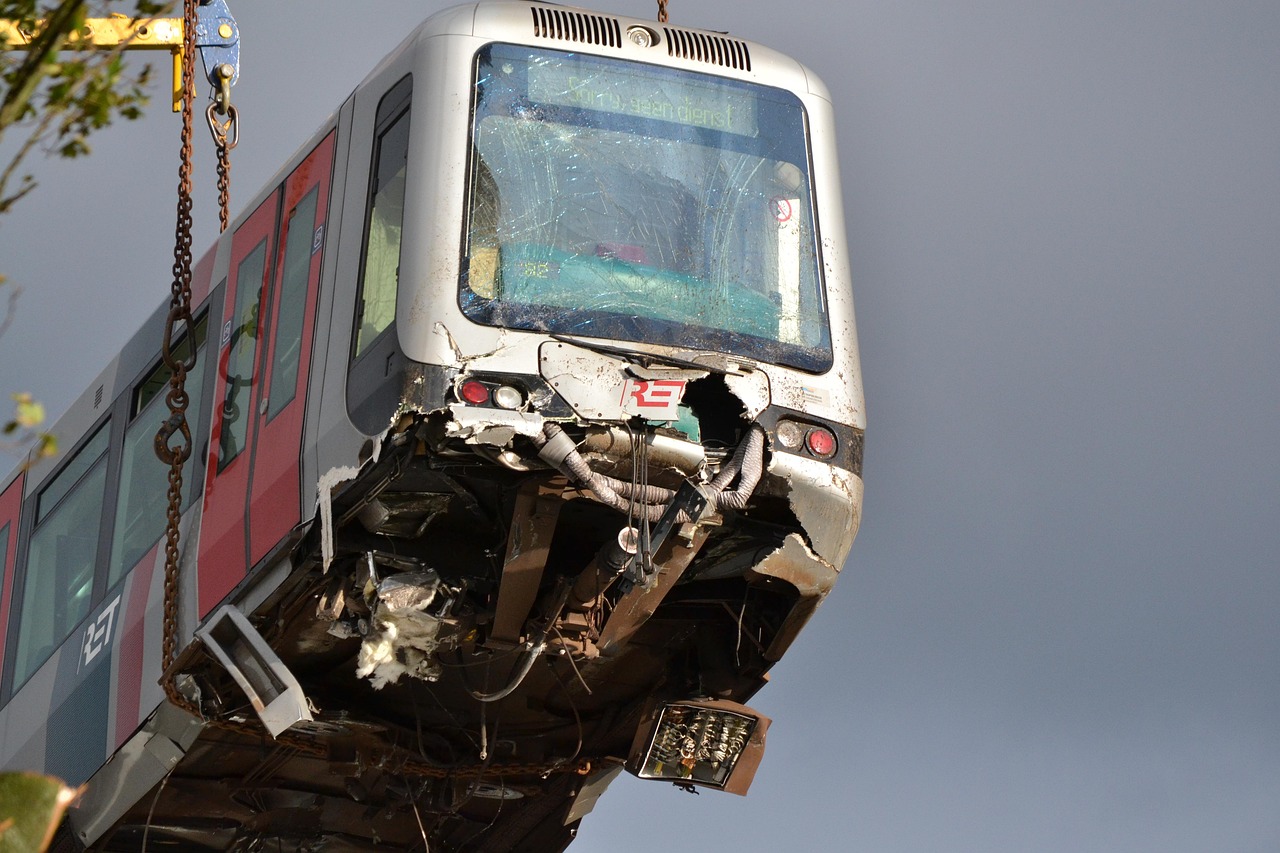
Photo by Janbaars60 on Pixabay