Police Deployed as Poland Faces a Major Constitutional Showdown in Warsaw
Hey everyone, welcome back to the blog! If you have been keeping an eye on international news lately, you probably know that European politics can get pretty intense. But things in Poland have just leveled up into a full-blown political thriller. We are talking about riot police deployed to the streets, high-stakes presidential U-turns, and a dramatic tug-of-war over the very soul of the nation’s legal system. Grab a cup of coffee because this situation is wild, and I am going to break it all down for you guys in a way that actually makes sense.
So, what is actually going on over in Warsaw? Picture this: riot police officers are stationed outside the Constitutional Tribunal, standing face-to-face with angry critics and protesters. Inside and around the building, a massive clash is playing out between the current government and some of the country’s top judges. It is the latest and most explosive chapter in a long-running feud between Prime Minister Donald Tusk and his political rivals from the right-wing Law and Justice party, commonly known as PiS.
How Things Blew Up
The latest crisis started heating up when Justice Minister Waldemar Żurek stepped forward and dropped a massive bombshell. He announced that he had officially requested to strip the court’s President, Bogdan Święczkowski, and Vice-President, Bartłomiej Sochański, of their legal immunity. Why? Because the government wants to slap them with criminal charges.
Naturally, this sent shockwaves through the political landscape. Prime Minister Tusk has made it his absolute mission to depoliticize the judiciary, arguing that the previous PiS administration completely messed up the court system. On a recent Friday, as PiS supporters flooded the streets outside the courthouse in Warsaw to protest the government’s aggressive moves, Tusk stood his ground and defended the intervention.
Meanwhile, things got even crazier on the presidential front. President Karol Nawrocki—who has the backing of the PiS party—was actually mid-air on his way to Senegal for the Summer Youth Olympic Games in Dakar. But upon hearing about the unfolding drama in Warsaw, he immediately turned his plane around, canceled the trip, and headed straight back to the capital to insert himself directly into the confrontation.
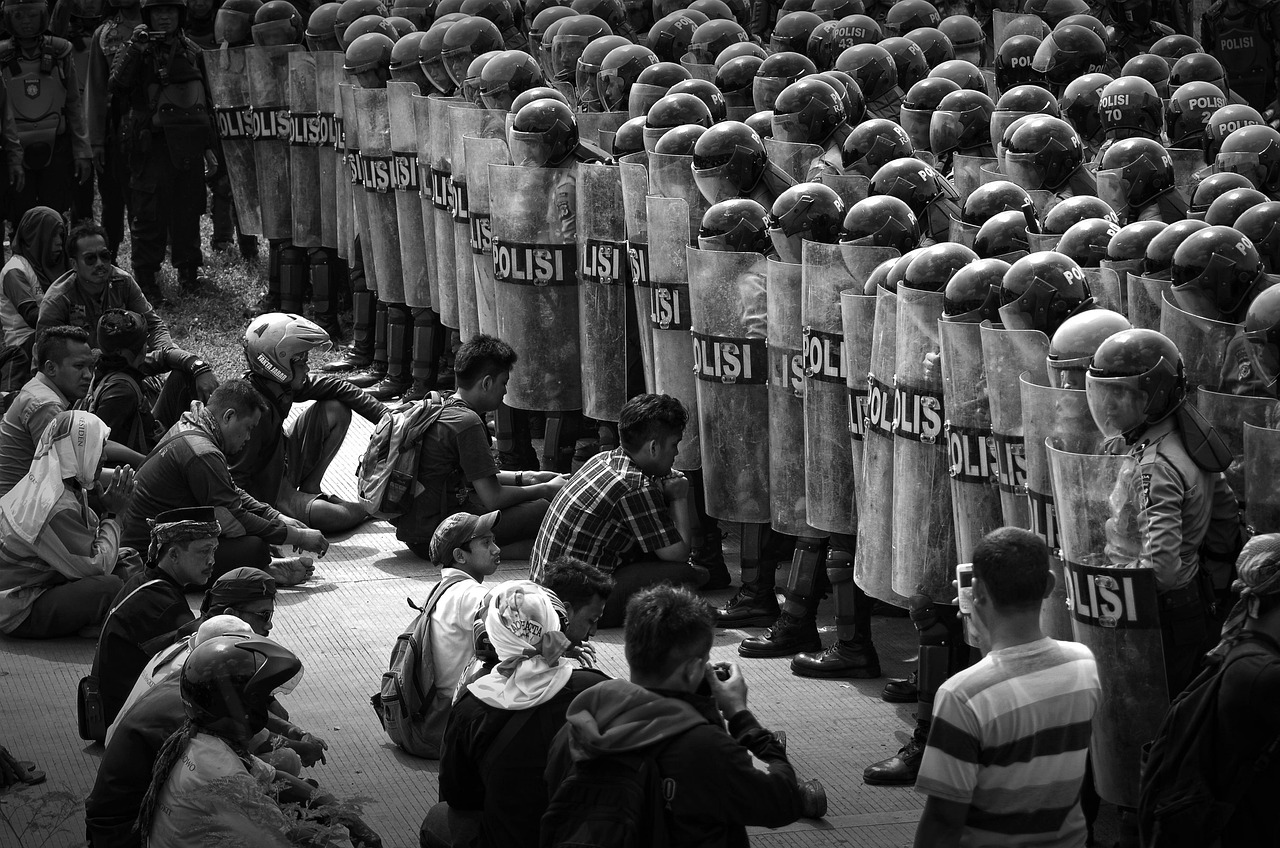
With tensions at an absolute boiling point, riot police were brought in as a physical barrier to block any demonstrators from forcing their way into the court building.
A Clash of Legal Interpretations
If you think this sounds like a chaotic mess, wait until you hear what both sides are saying legally, because it gets totally dizzying.
The Constitutional Court itself fired back on social media, insisting that the two high-ranking judges the government is trying to prosecute are still the legitimate, legally appointed senior justices of the institution. In fact, the court went as far as to post that anyone participating in the government’s current actions is essentially committing the crime of a coup d’état. Talk about high stakes!
On the flip side, Prime Minister Tusk took to social media to defend his tough stance. He wrote that restoring the rule of law is their ultimate duty. He admitted that after years of what he calls the lawlessness of the Law and Justice era, the process is difficult and sometimes painful, requiring decisive action. From his perspective, there simply is no other way to fix the system.
The Backstory: How Did Poland Get Here?
To really understand why the police are guarding a courthouse right now, we have to rewind a bit. Back in 2015, the PiS-led government took power and moved lightning-fast to pack the Constitutional Court with their own preferred judges. They wanted to secure a majority because this specific court holds massive power—it gets to decide whether new laws are constitutional or not.
It didn’t take long for top European courts to weigh in. Both the European Court of Human Rights and the Court of Justice of the European Union stepped in and ruled that the PiS majority had illegally elected three of those judges. The European courts essentially declared that Poland’s Constitutional Court was no longer an independent and impartial tribunal. Seizing on those rulings, Tusk’s government eventually stopped publishing the tribunal’s rulings altogether.
However, undoing the PiS era has proven to be an uphill battle for Tusk. He has repeatedly hit a brick wall because presidents like Nawrocki and his PiS-backed predecessor, Andrzej Duda, have used their presidential vetoes to block his sweeping legislative attempts.
The Battle Over Swearing-In Judges
The drama also involves a stubborn standoff over swearing in new judges. President Nawrocki has flatly refused to swear in five Constitutional Court judges who were elected by parliament since March. His reasoning? He claims there were serious flaws in their selection procedure.
Because of this standoff, one of those contested judges, Anna Korwin-Piotrowska, has actually been placed in temporary charge of running the court. Earlier this month, the Council of Europe’s advisory body on constitutional matters, the Venice Commission, chimed in by stating that Nawrocki really ought to swear the judges in so they can finally take their seats on the bench.
Justice Minister Żurek argued that Święczkowski and his vice-president deserved criminal charges specifically because they blocked these judges from doing their jobs and adjudicating cases.
Divided Opinions and Criticisms
Even though Tusk has a lot of support from people who want to see the old system overhauled, not everyone on his side is happy. Some of his most loyal supporters have actually criticized him for not acting fast enough or decisively enough to reverse the reforms from the PiS era. With parliamentary elections scheduled for next year, some political analysts view these aggressive moves as a calculated attempt by Tusk to boost his popularity among frustrated voters.
At the same time, his critics are slamming him from a completely different angle, warning that his tactics are dangerous for democracy. For instance, Tusk previously put forward Maciej Berek—a lawyer and a politician who served as a minister in his own cabinet—as a candidate for the court, raising eyebrows about political independence.
Even prominent legal experts who spent years criticizing PiS’s judicial overhauls are sounding the alarm. Professor Marcin Matczak, a well-known lawyer who has openly called Święczkowski the worst president the court has ever had, argued that the government’s suspension moves lack any legal basis “for a million reasons.”
In a blunt assessment posted online, Prof Matczak warned that the day’s actions effectively bury the institution and the concept of the rule of law for the next two decades. He added that the sight of armed police and legal interpretations where a justice minister can seemingly remove the head of a constitutional court by simple decree will trigger a powerful backlash against the rule of law for years to come.
As Poland stares down these deep divisions, it is clear that the political war between the government and the conservative establishment is far from over. With a conservative president ready to stand as a tough opponent to the Prime Minister, and European courts watching every move, this is definitely a story we will keep tracking right here on the blog. Let me know what you guys think about this in the comments below, and I will catch you in the next post!
source: feeds.bbci.co.uk (www.bbc.co.uk)
Photo by PanggihSeptaPerwira on Pixabay
