What a Tropical Fish Tells Us About the Amazon’s Climate Crisis
Hey there, fellow science and nature buffs! Today, we are taking a little virtual trip down to the lush, sprawling Amazon rainforest. We often hear about melting ice caps or scorching heatwaves in concrete jungles, but there is a fascinating story happening right beneath the water’s surface that deserves our attention. It involves a remarkable local fish, a dedicated scientist, and some pretty sobering warnings about the health of our planet.
Let’s set the scene by going back a few decades. Growing up in rural São Paulo, a young boy named Adalberto Luis Val used to stare into a lake where his father took him fishing. He spent hours wondering how all those aquatic creatures managed to breathe and survive down there. Driven by curiosity, he once scooped up a few fish, put them in a jar, and took them home to watch them. Sadly, by the next morning, they had all perished. While that broke his heart, it also sparked a lifelong obsession.
Fast forward to today, and Val has spent the last fifty years making Manaus, a major city in the Brazilian Amazon, his home and a global hub for tropical climate research. Now a 70-year-old award-winning ecophysiologist, he has dedicated his life to understanding gills, gases, and the delicate chemistry of how fish extract oxygen from water—and what happens when the climate goes haywire. That lifelong quest is ultimately what led him to the tambaqui.
The Canary in the Coal Mine of the Rainforest
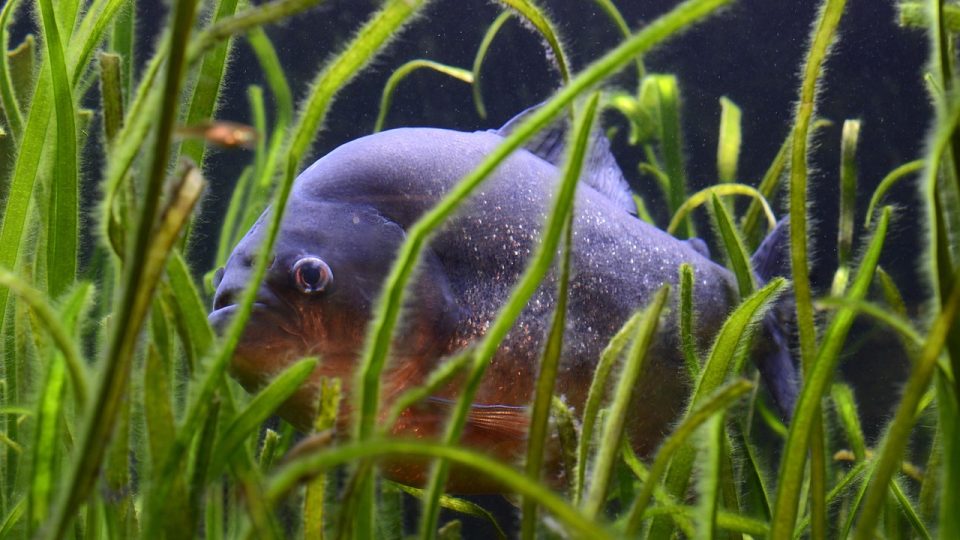
Back in the old days, miners used to carry caged canaries down into coal mines as an early-warning system for deadly, invisible gases. Well, in the heavily stressed Amazon rainforest, that job now falls to the tambaqui. This massive freshwater species, scientifically known as Colossoma macropomum, is a favorite among food lovers. But it is also famous for a very specific survival trick.
When rising temperatures cause oxygen levels in the water to plummet and carbon dioxide to spike, the tambaqui actually swims up to the surface. Thanks to millions of years of evolution, it features a protruding lower lip designed specifically to vacuum up oxygenated water right at the top. According to Val’s pioneering research, keeping an eye on this unique fish might actually be one of our most reliable ways to measure how resilient the Amazon forest itself really is.
As Val points out, the Amazon basin enjoyed a remarkably stable and predictable climate for roughly 65 million years. During this long stretch, water oxygen levels would reliably rise during cool nights and drop during warm days. But ever since the Industrial Revolution kicked off, everything started to shift drastically.
From Local Waters to Global Recognition
Working as a leading investigator at the National Institute for Amazonian Studies (INPA), Val discovered something crucial: tropical fish are far more sensitive to shifts in heat, humidity, and airborne or waterborne chemicals than their counterparts in cooler, temperate zones. When you pile on heavy human impacts—such as slash-and-burn agriculture, wildcat mining, and chemical runoff flowing straight into local rivers—many iconic river species are pushed right to the edge of survival.
After years of documenting these accumulating climate pressures in Amazonia, Val’s incredible contributions are finally earning him international recognition. He traveled to the University of Southampton in the UK to receive the Fisheries Society of the British Isles’ prestigious Le Cren Medal. It is a massive honor for his lifelong dedication to international aquatic science.
The stocky scientist, easily recognizable by his trademark big straw hats and broad smile, is no stranger to accolades. He has already authored 22 books, published around 280 scientific articles, and received Brazil’s Grand Cross of the National Order of Scientific Merit alongside the American Fisheries Society Award of Excellence. However, this particular medal was especially historic, marking the very first time it was awarded to a scholar living and working in the tropics. It is a well-deserved nod to the region where planetary biodiversity is at its peak and the fight against climate disruption is most intense.
As Chris Wood, a University of British Columbia biologist and longtime research partner of Val’s, points out, plenty of incredible climate research happens in North America and northern Europe. But very few people were doing this critical work right on the equator where populations are growing rapidly. Combine climate change, pollution, and deforestation with intense tropical migration, and you have a recipe for a perfect storm.
Simulating the Future in the Laboratory
To truly understand just how fragile these ecosystems are, Val and his team at INPA needed to measure the unmeasurable. Baseline science told them that rainforest fish thrive within a fairly narrow temperature band, usually between 27C and 31C (80.6-87.8F). Anything higher than that can quickly become fatal.
To see how the future might look, the research team divided their laboratory into four distinct chambers to monitor the vital signs of tambaqui and other aquatic species as simulated heat and drought conditions intensified. Three of these chambers were specifically engineered to replicate mild, medium, and extreme climate scenarios outlined by the Intergovernmental Panel on Climate Change (IPCC) for the year 2100. Meanwhile, the fourth chamber served as a control, mirroring the exact real-time temperatures, carbon dioxide levels, luminosity, and humidity of the current river basin using data fed from sensors mounted on a forest observation tower.
The results were eye-opening. Excessive warming heats up the water, drains it of vital oxygen, and severely damages the vascular systems, metabolism, and overall physiology of river fish. And the stakes go far beyond just saving a single aquatic species.
As Val explains, tambaqui play a vital role in transporting seeds along the winding paths of rivers. If you deplete the tambaqui population, you directly handicap the forest’s ability to recover and regenerate.
A Looming Crisis for Nature and Humans Alike
Outside the laboratory, Val’s team has witnessed firsthand how soaring temperatures are prolonging the dry season with catastrophic consequences. Back-to-back record droughts in 2023 and 2024 triggered massive die-offs among fish and river dolphins across the entire Amazon basin. Consequently, Brazil’s biodiversity authority, ICMBio, recently added the tambaqui to the official list of species at risk of extinction.
The danger doesn’t stop at heat alone. Val’s research warns that tropical waterways are intensely vulnerable to broader, human-driven habitat destruction. Forest clearing and active fires pump toxic soot and ash straight into the air and watersheds. Chemical runoff from mining operations and large-scale plantations eventually ends up in rivers and aquifers, ruining drinking water, contaminating local fish, and exposing humans to dangerous trace elements like copper, mercury, microplastics, and various pesticides.
Furthermore, a warmer and wetter Amazon could easily foster toxic algal blooms or multiply mosquito populations. That brings a higher risk of vector-borne illnesses such as malaria, dengue, and chikungunya.
This combined fallout poses a direct threat to the roughly 40 million people living across the eight nations of the Amazon Basin. In these communities, freshwater catches can make up as much as 90% of local diets. While fish account for about 6.7% of global protein consumption worldwide, roughly 3.1 billion people rely on fish for at least a fifth of their daily protein. This is especially true in the global south, where coastal and riverine populations depend on their daily catch for up to 70% of what they eat.
Why We Ignore the Tropics at Our Own Peril
Ultimately, Adalberto Luis Val’s life’s work serves as a powerful reminder that what happens in the Amazon matters to every single one of us. There is simply no way to understand—let alone contain—our current climate crisis without supporting cutting-edge science right inside the tropical biomes and the waterways that keep them alive.
Troublingly, Val points out that financial investment in research and technology within this marquee Amazonian nation remains a tiny fraction—just 3% to 4%—of Brazil’s total scientific budget. The outcome is a massive global blind spot that we ignore at our collective peril.
As Val eloquently puts it, every single species in the Amazon holds a treasure trove of information about its habitat. That knowledge is profoundly relevant when it comes to managing aquatic life and conserving the forest as a whole. When we destroy parts of this ecosystem, we are often destroying the unknown—permanently losing vital knowledge that we do not yet possess and perhaps never will.
It’s a heavy thought to leave you with, but understanding these interconnected ecosystems is the first real step toward protecting them. Thanks for dropping by, and stay curious out there!
source: theguardian.com (www.theguardian.com)
Photo by anncapictures on Pixabay