Australia Loses Its Retail Icon as David Jones Enters Administration After 188 Years
Hey there, fellow news surfers! Grab your coffee and let’s talk about some pretty heavy retail news coming out of Australia. If you’ve been keeping an eye on the high street, you probably already know that things haven’t been easy for traditional brick-and-mortar stores lately. But even with that in mind, this next piece of news feels like the end of an absolute era down under.
We are talking about David Jones—yes, the oldest department store chain in Australia—officially plunging into voluntary administration. For a brand that has been kicking around for a whopping 188 years, this is a massive blow. Locally known as “DJs,” this name wasn’t just a place to buy clothes or homewares; it was an institution. Unfortunately, years of ongoing financial hurdles and shoppers shifting their buying habits online have finally caught up with the retail giant.
Now, before everyone panics, here is the immediate silver lining: both the physical storefronts and the online shopping portal are still running business as usual while the appointed receivers from FTI Consulting take a close look at the books and review the company’s overall situation. The voluntary administrators over at McGrathNicol are steering the ship through this choppy transitional phase.
The company’s CEO, Erica Berthold, didn’t shy away from the emotional weight of the announcement. She pointed out that David Jones is a deeply iconic brand that holds a special place in the hearts of countless Australians who grew up visiting the stores and making memories there. Berthold mentioned that the business actually has a thoroughly developed strategy designed to reset everything for the future, while also making sure to thank the customers, staff, and partners who have stuck by them through these trying times.
A Giant Footprint and Mounting Pressures
Let’s look at the sheer scale of what we are dealing with here. David Jones currently employs roughly 6,000 workers and maintains 38 physical shops scattered across the country. Out of those, a notable 17 locations are tucked right inside Westfield shopping centres. And that brings us to one of the major tipping points that forced the board’s hand.
Just a few hours before the official vote to enter administration went down, Scentre—the company that owns the Westfield properties—came forward with some alarming details. According to them, the retailer had failed to cough up its rent payments for the month of October. Because of that missing cash, David Jones was officially in breach of its leasing agreements.
Christopher Hill, speaking on behalf of the receivers at FTI Consulting, laid out the harsh realities that pushed the company to the brink. He pointed to the current brutal retail climate, soaring operational costs, an overly massive and out-of-date physical footprint, and continuous headaches in the supply chain as the main culprits that dragged the business to this unfortunate destination.
By taking the route of appointing administrators and receivers, Hill explained that the retailer would finally secure some much-needed breathing space. This legal maneuver gives them a fighting chance to properly restructure the operations and figure out a sustainable path forward.
The Golden Age of Glamour and the Houndstooth Legacy
For generations of Australians, stepping into a David Jones was synonymous with pure luxury. The brand was famously anchored by its distinct black-and-white houndstooth design, which practically screamed high-end sophistication long before modern fast-fashion took over the market.
However, experts are calling this collapse the definitive death knell for the classic department store model as we once knew it. Jana Bowden, a marketing lecturer at Macquarie University’s Business School, didn’t hold back when describing what the brand used to mean to the public. She noted that it was once the absolute epitome of glamorous shopping in Australia—the local equivalent to Harrods. It was a destination where people went simply to bask in the glitz, marvel at top-tier luxury labels, and feel a sense of personal achievement.
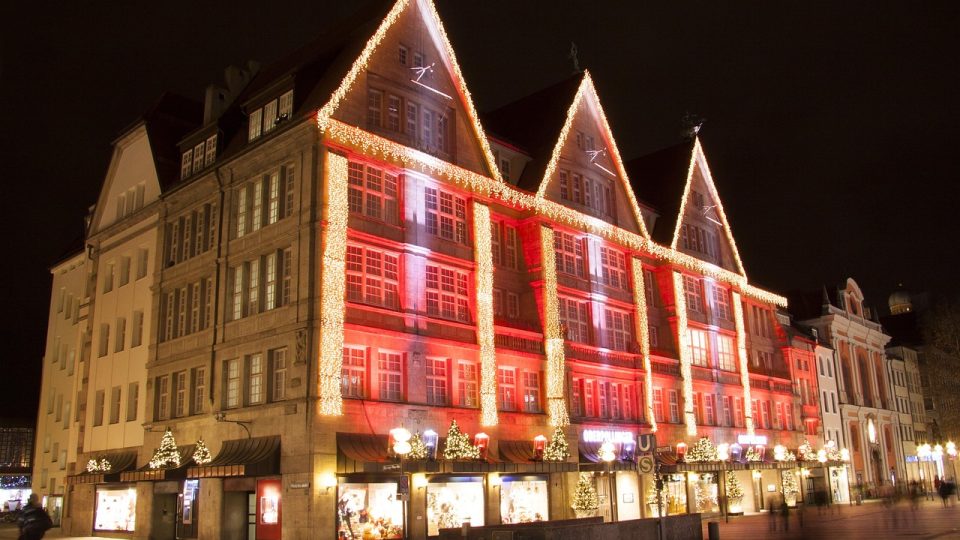
For many local families, planning a trip to the flagship city locations in Sydney and Melbourne was practically a sacred annual ritual. This was particularly true around the festive season, when people would brave the crowds specifically to marvel at the magical Christmas window displays. Bowden shared that folks would willingly travel hours just to experience that festive magic in the city. Sadly, over recent years, that brilliant shine began to fade.
While the major flagship locations in the city centres managed to hold onto their upper-crust elegance and high-end reputation, the suburban branches unfortunately began to fall flat. According to Bowden, those suburban locations started feeling mundane, lacking the excitement and glitz that once made the brand so magnetic to everyday shoppers.
A Royal History Left Behind
To really understand how deeply woven David Jones is into the fabric of Australian society, you only have to look back at its royal credentials. Back in 1954, during Queen Elizabeth II’s historic very first visit to Sydney, the then-27-year-old monarch actually attended an exclusive banquet dinner held on the seventh floor of the famous Elizabeth Street store, as documented by the Sydney Morning Herald.
It is wild to think about a retail space playing host to such high-profile historical moments, only to face these kinds of modern financial struggles decades later. As the receivers dig into the review process over the coming weeks, thousands of employees and loyal customers will be watching closely to see if this historic icon can somehow reinvent itself and survive the digital age.
What are your thoughts on the decline of the traditional department store? Did you ever grow up visiting these massive retail palaces for the holidays? Let me know your memories down in the comments, and stay tuned as we follow how this retail shake-up develops!
source: feeds.bbci.co.uk (www.bbc.co.uk)