Fake Bomb Threats Cause Major Chaos Across European Skies
Hey there, travel lovers! If you have been keeping an eye on the news lately, you probably already know that flying around Europe has gotten a little extra stressful this week. Air travel took a wild and chaotic turn as at least 21 aircraft and several major airports found themselves caught in the crosshairs of a massive wave of bomb threats. Sounds terrifying, right? Thankfully, officials are stepping up to reassure everyone that these alerts were nothing more than malicious hoaxes, though they definitely gave passengers and crew members quite a scare.
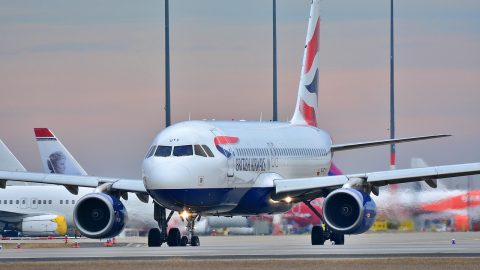
The disruption spread like wildfire, touching flights heading to a whole bunch of countries including Austria, Belgium, Bulgaria, the Czech Republic, France, Italy, Poland, and Romania. If you can imagine being comfortably up in the clouds only to suddenly find your plane escorted by fighter jets or forced to land at an unexpected military base, that is exactly what went down for plenty of travelers. For instance, an Aer Lingus flight making its way from Dublin all the way to Rome had to completely change course and land at a military air base over in France. Meanwhile, Italian fighter jets were scrambled to escort a Finnair flight coming in from Helsinki straight into Rome.
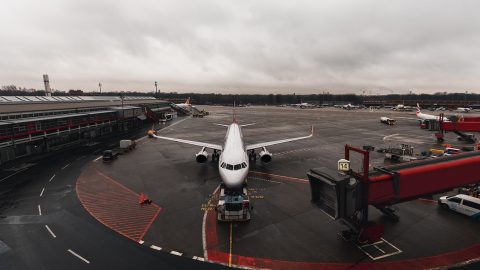
Things were just as tense on the ground. Over in the UK, massive transport hubs like London Heathrow and Birmingham Airport received sudden threat warnings. Officials quickly jumped into action, assessing the situations and thankfully determining that the threats were not credible. Budget airlines weren’t spared either. EasyJet shared that some of their flights coming in from places like Newcastle and Glasgow were met by local police units right upon landing in Prague as an absolute safety precaution. Wizz Air, LOT Polish Airlines, Ryanair, Aegean Airlines, Iberia, and Air Serbia also found themselves dealing with the unexpected headache of diverted routes, delayed takeoffs, and intense security screenings.
Naturally, when security teams swarm a plane, no explosives are actually found. After thorough searches, bomb squad checks, and working with sniffer dogs, authorities confirmed that all the threats turned out to be completely empty. But trying to figure out who is behind all this nonsense is proving to be a real puzzle. In Italy, airport authorities in Rome revealed that emails containing the warnings were sent for inbound flights. These chilling messages were signed using the name “Fighters of the Male State,” with the senders claiming they wanted to target a “feminist regime” and threatening to turn the skies red.
Experts point out that this name likely links back to an ultra-right Russian group called “Muzhskoi Legion,” which translates to the Male Legion. This particular group has such extreme views that a Moscow court actually banned them back in 2021. Even so, they managed to keep a massive online following as they cheered on the full-scale invasion of Ukraine. Even with this digital footprint, police and airport authorities admit that tracking down the exact person or group generating these fake alerts is going to be a tough nut to crack.
Over in the UK, Transport Secretary Heidi Alexander did not hold back her thoughts, describing the entire ordeal as a series of malicious hoax threats. She emphasized that the government takes every single warning seriously, pointing out that there are well-established procedures specifically designed to handle this kind of nonsense safely and efficiently. Heathrow Airport also released a statement assuring passengers that there was never any actual risk to travelers or staff members, praising the robust security standards that aviation authorities have in place to manage these stressful scenarios.
Just imagine being one of the everyday passengers caught right in the middle of all this drama. Emily Noble, a 26-year-old traveler from Dublin, was about an hour into her flight heading to a friend’s wedding in Rome when things started feeling off. Crew members initially mentioned a technical problem, but as the plane started circling for an unplanned landing in France, the pilot finally announced there was a security issue. Emily shared that it was a truly weird and worrying experience because nobody really knew what was happening, though everyone tried their absolute best to stay calm. She even heard fighter jets roaring outside during the landing and spotted one touching down right behind her aircraft. Passengers had to stay stuck on board for two and a half hours while police and military personnel searched the plane with dogs before eventually arranging alternative travel to Rome.
Aviation security professionals have been left scratching their heads over the sheer scale of this week’s events. Philip Baum, an aviation security professor at the University of Coventry, noted that while the industry deals with bomb threats on a daily basis, this particular cluster of incidents came as quite a surprise. He pointed out that flights are only ever diverted when authorities genuinely believe a threat might be credible. His main worry is that if people start spamming enough fake threats, the system might eventually grow complacent, which is a dangerous trap.
Echoing those thoughts, Kingston University aviation expert Marco Chan suggested that these incidents look a lot like a pattern of cheap, deniable disruptions aimed at messing with European air travel. Whether it is coordinated or just a wave of copycats jumping on a trend, the reality is that this week has marked the second time in just a few days that flights have been forced to scramble. Back on Monday, a Wizz Air flight heading from London Luton Airport to Sofia even had to be escorted by a Hungarian fighter jet to Budapest following a mid-air alert.
At the end of the day, while it is an absolute pain for everyone whose travel plans got completely turned upside down, it is also a massive relief to know that all these alarms turned out to be nothing more than empty threats. Let us all hope the skies stay quiet and peaceful for the rest of the week!
source: feeds.bbci.co.uk (www.bbc.co.uk)